Oceanfront gets most of the attention on the Grand Strand, but second-row property has a passionate and growing buyer following. Second-row, meaning across the street or one lot back from the beach, delivers a lot of the coastal lifestyle for meaningfully less money and often with fewer of the maintenance headaches that come with true oceanfront. For a specific type of buyer, second-row is not a compromise. It is a smarter path to coastal living. Below is what makes second-row so appealing and what to watch for before buying.
What Second-Row Actually Means
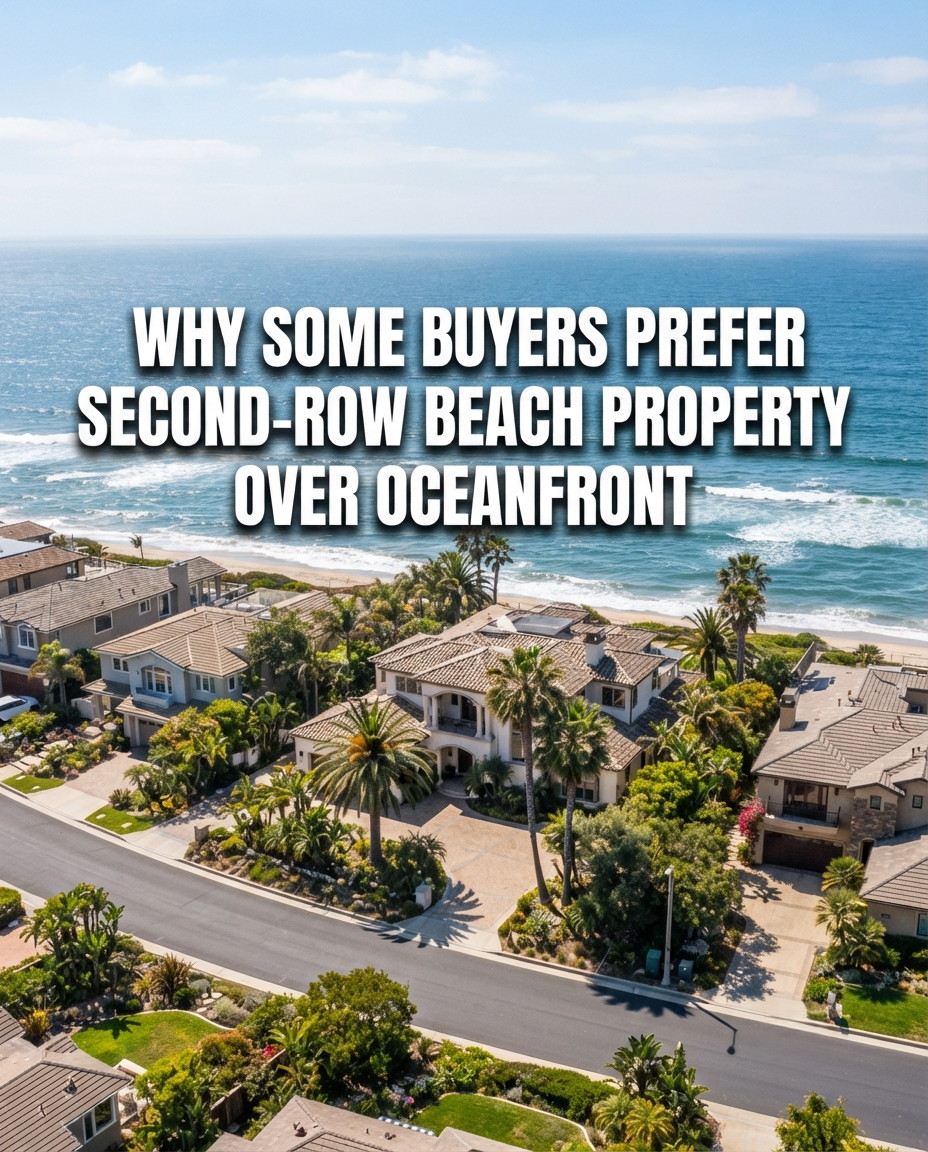
Second-row property is not always defined the same way. On the Grand Strand, buyers typically use the term to describe homes and condos that sit directly across the beach road from oceanfront, one house back from the dunes, or in some cases two lots back with a clear pathway to the sand.
The Practical Definition Buyers Use
If you can walk to the beach in a couple of minutes without crossing a busy road twice, most buyers consider that second-row. If the walk feels like a real trip, it is probably third-row or beyond.
Product Mix
Second-row includes raised beach homes, mid-rise condos, townhomes, and single-family homes. Some second-row units even have partial ocean views from upper floors. For a look at one of the most popular second-row product types, see our blog on why buyers love raised beach homes in North Myrtle Beach.
The Case for Second-Row Over Oceanfront
The case is stronger than most buyers assume.
Lower Purchase Price
Second-row property typically trades at a meaningful discount to oceanfront. Buyers can often get more square footage, better condition, or a nicer neighborhood for the same money.
Lower Carrying Cost
The savings continue after purchase. Insurance is lower, HOA fees are typically lower for second-row condos, and coastal maintenance costs are also lower. For background on the oceanfront cost stack, see our blog on the true cost of owning an oceanfront condo on the Grand Strand.
Less Salt Exposure
Second-row homes take less direct salt and wind exposure than oceanfront. That translates into slower wear on HVAC, roofs, windows, and exterior materials. For background, see our blog on how salt air affects coastal properties.
Quieter Neighborhood Feel
Second-row streets tend to feel more residential and less touristy than the immediate oceanfront corridor. For full-time residents and long-stay second-home owners, this often matters more than the extra 200 feet of beach walk.
What Second-Row Buyers Give Up
The trade-offs are real, and buyers should be honest about them.
Direct Ocean Views
Most second-row property does not have unobstructed ocean views. Some upper-floor units get partial views, but the classic sit-on-the-balcony-and-watch-the-waves experience is generally an oceanfront-only feature.
Immediate Beach Access
Second-row buyers walk to the beach. It is not a hardship, but it is not the front-door beach access oceanfront delivers.
Slightly Weaker Rental Story in Some Cases
Vacation renters often pay a premium specifically for oceanfront. Second-row rental income can be strong, especially for the right product, but it may not match oceanfront on a nightly-rate basis. For background, see our blog on what buyers should know before purchasing a vacation rental.
Where Second-Row Works Best on the Grand Strand
Some sections of the Grand Strand have stronger second-row inventory than others.
North Myrtle Beach Residential Streets
The residential streets one and two lots back from the NMB oceanfront corridor are second-row country. Ocean Drive, Cherry Grove, and Windy Hill sections all have deep second-row inventory in a mix of product types.
Cherry Grove Beach Cottages
Cherry Grove has a long tradition of second-row beach cottages that families have owned for generations. The lifestyle blends the beach with a real residential feel. For a broader look, see our blog on what it is like to live full-time in Cherry Grove, SC.
Windy Hill Section
Windy Hill mixes oceanfront condos with residential second-row streets that include everything from beach cottages to condos.
Diligence Items for Second-Row Buyers
Second-row buyers should still respect the coastal diligence checklist.
Flood Zone Reality
Many second-row properties are still in FEMA flood zones, sometimes at slightly lower risk designations than oceanfront but not always. Confirm the specific parcel's zone before assuming savings. For background, see our blog on coastal South Carolina flood zones explained for homebuyers.
Beach Access Rights
Second-row buyers should understand the beach access points near the property. Some accesses are public, some are neighborhood-only, and some are on the far end of a block from the specific home.
Insurance Reality Check
Insurance is generally lower than oceanfront, but not automatically cheap. Get quotes as part of your diligence. For background, see our blog on what wind and hail insurance covers in coastal South Carolina.
Who Second-Row Fits Best
Second-row appeals to buyers who value the coastal lifestyle without the oceanfront premium.
Full-Time and Long-Stay Residents
Owners who spend real time in the home often value the quieter, more residential feel of second-row over the tourism density of the immediate oceanfront.
Value-Focused Investors
Investors who want strong rental returns without the oceanfront carrying cost often find second-row produces better cash-on-cash yields.
Buyers Prioritizing Space and Character
Second-row homes tend to have larger lots and more residential character than oceanfront. Buyers who want a real yard, mature trees, or a home that does not feel like a tourist product often lean second-row.
Key Takeaways
- Second-row property delivers a large share of the coastal lifestyle at a lower purchase price, lower carrying cost, and lower salt exposure than oceanfront
- The trade-offs are real, primarily ocean views, direct beach access, and sometimes rental nightly rates
- NMB residential streets, Cherry Grove beach cottages, and the Windy Hill section all offer deep second-row inventory
- Flood zone, beach access rights, and insurance still deserve careful diligence even without direct oceanfront exposure
For a specific type of buyer, second-row is not a downgrade from oceanfront. It is a different, and often smarter, path to coastal living.
About Greg Harrelson
Greg Harrelson is a seasoned Realtor® with more than 30 years of experience serving the Myrtle Beach and Grand Strand markets. As the founder of Century 21 The Harrelson Group, Greg has built his career helping buyers, sellers, and investors achieve success in every corner of the coastal Carolina real estate market. His expertise spans residential homes, investment properties, land development, and coastal condos. Known for his deep local knowledge, innovative marketing strategies, and commitment to personal service, Greg consistently helps clients reach their real estate goals while navigating the ever-changing market with confidence and precision.