Most people meet North Myrtle Beach in July. The beach is packed, Highway 17 is slow, and every restaurant on Main Street has a wait. It is a fun version of the town, but it is not the one most full-time residents actually live in.
When buyers ask me what it is really like to live here, I usually tell them to come back in October or February. That is when you see the town the way locals do.
The Shift Starts After Labor Day
The change is not instant, but you feel it by mid-September. Families head home for school, weekly rentals thin out, and parking stops being a strategy. The water is still warm well into fall, and many of us would argue September and October are the best beach months of the year.
Fall is also when the shag dancing crowd comes to town. Main Street and the clubs near Ocean Drive fill with dancers who have been coming for decades. It has a completely different energy than summer. It is social, a little nostalgic, and very North Myrtle Beach.
What the Beach Feels Like in Winter
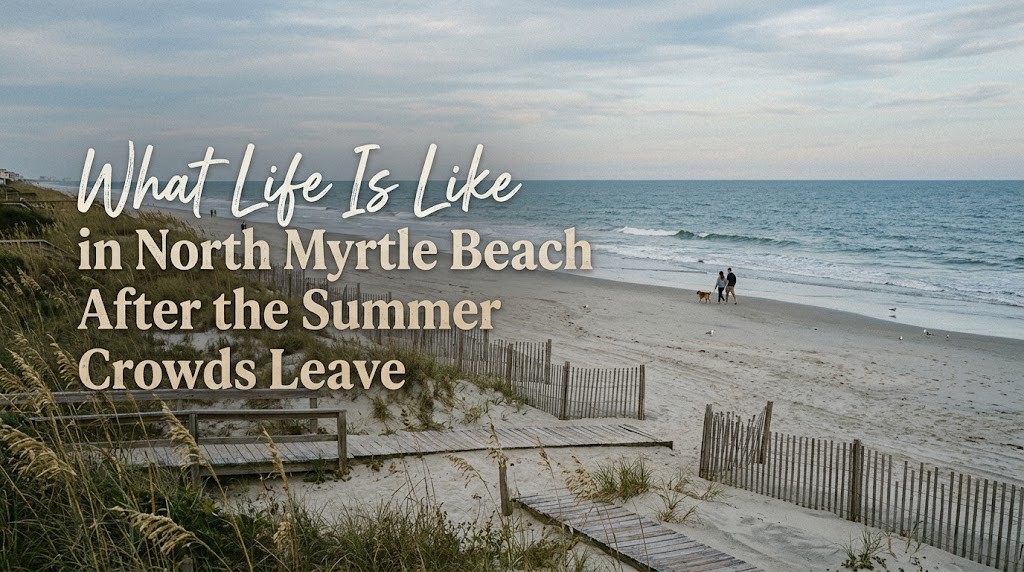
Winter on the Grand Strand is mild by most standards. There are cold snaps, and the wind off the ocean can bite, but plenty of days are good for a long walk in a light jacket. The beach in January belongs to dog walkers, shell hunters, and people who just want quiet.
That quiet is a big part of why buyers fall for neighborhoods close to the water. Golf-cart streets like Tilghman Estates, a few blocks off Ocean Drive, feel like a small town in the off-season. Neighbors actually see each other.
Fishing Stays Busy
Fall is a strong season for anglers. Pier and surf fishing pick up as the water cools, and the inlet and marsh around Cherry Grove stay active. If you own near the water, this is when you will use your gear the most and fight the fewest crowds doing it.
Golf Gets Easier to Book
Tee times open up and green fees often come down outside peak golf seasons. Residents of golf communities tend to play more in the cooler months than they do in August, when the heat makes an afternoon round a commitment.
Day-to-Day Living Gets Simpler
The practical side of off-season life is a big deal for full-time residents.
- Traffic on Highway 17 and Sea Mountain Highway eases noticeably.
- Grocery runs, pharmacy stops, and doctor visits take less time.
- Locals' favorite restaurants are easier to get into, though some trim their hours or close for a few weeks in winter.
- Barefoot Landing and Main Street shift from tourist pace to neighborhood pace.
One thing I always mention: a handful of seasonal businesses close for part of the winter. It is not a ghost town by any stretch, but newcomers sometimes expect every beach shop to be open year-round. Plan accordingly and you will find plenty open.
The Snowbird Season
From about January through March, North Myrtle Beach picks up a second wave of residents. Snowbirds from the Northeast, the Midwest, and Canada rent monthly, especially in oceanfront condo buildings. They bring a steady, friendly crowd to church services, restaurants, and community events during what would otherwise be the quietest stretch of the year.
For condo owners, this matters. Owners in buildings like Cherry Grove condos or The Heights at Windy Hill sometimes book monthly winter guests, which can smooth out rental income outside the summer season. Rules vary by building and HOA, so it is worth checking before you buy if that is part of your plan.
Community Feels Closer
This is the part that surprises people most. In summer, it is easy to feel like a visitor in your own town. In the off-season, North Myrtle Beach feels like a small coastal city where people know each other. Church groups, civic clubs, the shag community, fishing buddies, golf groups, and neighborhood associations all become more visible.
I tell relocating buyers to give it one full year before deciding how they feel. The first summer can be overwhelming. By the first winter, most of them have found their people.
Where Full-Time Residents Tend to Live
Full-time residents often lean toward neighborhoods with a mix of owners who live here year-round, rather than buildings that are almost entirely short-term rentals. Some like the convenience of resort-style living in places such as Arbor Trace at Barefoot Resort, where golf, pools, and the waterway are close by. Others want a single-family home on a quiet street a few blocks back from the ocean.
If you are considering a move, spend time here in different seasons. Drive the neighborhoods on a Tuesday evening in November. See which streets have porch lights on. That tells you more about a community than any summer weekend will.
Key Takeaways
North Myrtle Beach slows down considerably from September through spring, and that is when most full-time residents say they enjoy it most. Fall brings warm water, good fishing, and the shag crowd. Winter is mild and quiet, with a snowbird season that keeps things social. If you are thinking about living here year-round, visit in the off-season and look for neighborhoods with a strong base of full-time owners.
About Greg Harrelson
Greg Harrelson is a seasoned Realtor® with more than 30 years of experience serving the Myrtle Beach and Grand Strand markets. As the founder of Century 21 The Harrelson Group, Greg has built his career helping buyers, sellers, and investors achieve success in every corner of the coastal Carolina real estate market. His expertise spans residential homes, investment properties, land development, and coastal condos. Known for his deep local knowledge, innovative marketing strategies, and commitment to personal service, Greg consistently helps clients reach their real estate goals while navigating the ever-changing market with confidence and precision.