On the Grand Strand, buyers quickly notice that a lot of homes sit higher off the ground than they would inland. Raised foundations, piling-supported homes, and elevated construction are not a style choice down here — they are a practical response to flood risk, storm surge, and coastal insurance realities. For buyers looking at anything near the beach, understanding how elevated foundations actually work changes how you evaluate the home.
Why Elevated Foundations Exist on the Coast
Flood zones, storm surge, and FEMA building code requirements combine here. Homes in high-risk flood zones are typically required to be elevated to a specific base flood elevation. Older homes that predate the code may sit lower than the current standard, which affects their insurance pricing in a big way.
The lift matters. A home elevated above the base flood elevation often qualifies for meaningfully better flood insurance rates than a comparable home sitting at ground level. Over decades of ownership, that gap adds up.
The Main Types of Elevated Construction
Piling-Supported Beach Homes
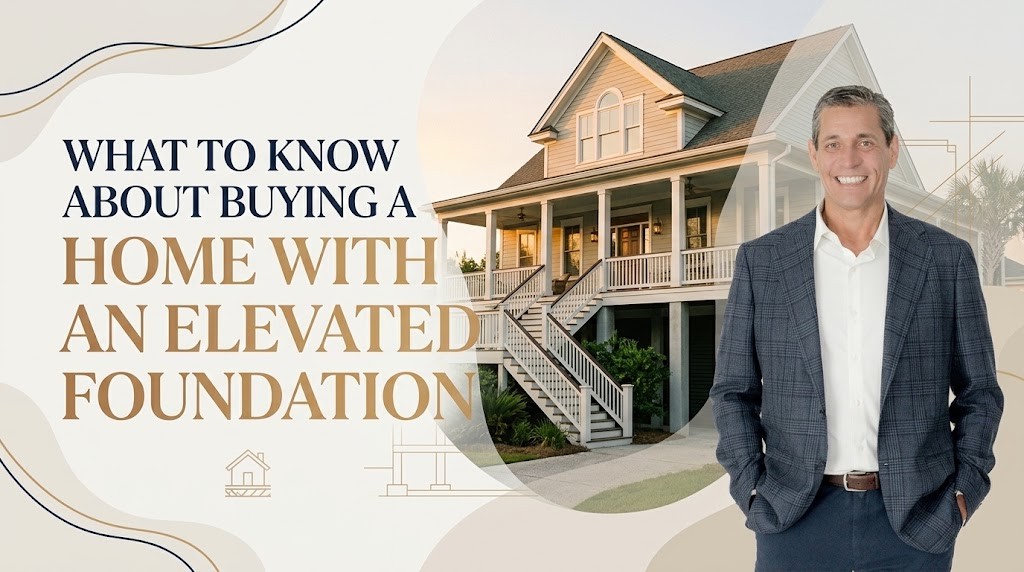
Classic raised beach homes sit on wood or concrete pilings driven deep into the ground. The main living area is often one full story up, with parking, storage, or an enclosed ground floor below. Common throughout coastal sections. For a broader look at this product type, see our blog on why buyers love raised beach homes in North Myrtle Beach.
Elevated Slab Foundations
Some newer coastal homes use elevated concrete slabs rather than full piling systems. The home sits above base flood elevation but has a solid foundation underneath rather than open piling space.
Crawl Space with Elevated First Floor
A middle option — vented or sealed crawl space below, main living above. Common in inland coastal areas where the flood risk is lower but still real.
Channel Home Lifts
Cherry Grove channel homes often combine raised construction with private docks. The elevation protects the home while the dock enables water access. See our blog on Cherry Grove channel homes.
What Buyers Should Actually Check
Elevation Certificate
Request the home's current elevation certificate. It documents the lowest floor elevation relative to the base flood elevation. This drives insurance pricing directly. If the home does not have one, consider ordering a new survey — it is one of the highest-leverage pieces of diligence on a coastal home.
Flood Zone Designation
The FEMA flood zone determines whether flood insurance is required and at what rate structure. For a broader look, see our blog on coastal South Carolina flood zones explained for homebuyers.
Piling Condition on Older Homes
On older piling-supported homes, the pilings themselves age. A specialist inspection can confirm the pilings are structurally sound. Water damage, insect damage, and settling at the base all affect long-term integrity.
Enclosed Ground Floor Compliance
Many elevated homes have an enclosed ground-level space used for parking or storage. FEMA has specific rules about what that space can be used for while maintaining compliance. Converting that space into finished living area can trigger insurance and permit issues.
Stair and Access Considerations
Walking up a flight of exterior stairs every time you enter the home is part of the lifestyle. For buyers who are planning long-term ownership through retirement, confirm whether the home has or could accommodate an elevator or lift.
How Elevated Foundations Affect Insurance
Elevation is one of the biggest single drivers of flood insurance pricing. A home that sits two or three feet above base flood elevation can see dramatically lower annual premiums than an identical home sitting at ground level in the same flood zone.
Wind insurance works somewhat differently. Elevation itself does not reduce wind coverage much, but wind mitigation features often included in elevated construction (hurricane strapping, impact windows, reinforced roofs) can lower those premiums. See our blog on understanding wind mitigation inspections and insurance savings.
Where Elevated Homes Concentrate
Oceanfront and Beachfront
Virtually all newer oceanfront and beachfront construction is elevated to code. Older stock varies.
Cherry Grove Channel Homes
Nearly universal in the channel section due to flood zone requirements and historical building practices.
Marsh-Adjacent Lots
Homes bordering marsh areas, especially in Cherry Grove and parts of Little River, are typically elevated.
Inland Flood Zones
Some inland homes near the Waccamaw River or in low-lying areas use elevated construction too. For a broader view of that corridor, see our blog on what makes the Waccamaw River corridor special for homebuyers.
Living in an Elevated Home
Day to day, you climb stairs. Groceries, luggage, deliveries all go up. Most owners adjust quickly and come to appreciate the elevated views and better airflow. Some find the stairs become more of a factor as they age, which is why aging-in-place planning sometimes shifts buyers toward single-level inland alternatives when the time comes.
The elevated ground floor becomes storage, garage space, and sometimes a covered outdoor hangout. On well-designed elevated homes, that under-house space adds real functional value.
Key Takeaways
- Elevated foundations on the Grand Strand are a flood-code response, not a style choice — they drive insurance pricing meaningfully.
- Piling-supported beach homes, elevated slabs, raised crawl spaces, and channel home lifts are the main types buyers encounter.
- An elevation certificate is one of the highest-leverage pieces of diligence on a coastal home — request it early.
- Piling condition on older homes, enclosed ground-floor compliance, and long-term stair accessibility all matter.
- Elevated construction concentrates oceanfront, in Cherry Grove channel homes, in marsh-adjacent lots, and in some inland flood zones.
Frequently Asked Questions
What is an elevation certificate?
An elevation certificate is a FEMA document that records the lowest floor elevation of a building relative to the base flood elevation. It is used by insurers to rate flood coverage and by lenders to confirm compliance. Most coastal buyers want to see one before finalizing an offer.
Can I finish the ground floor of an elevated beach home as living space?
Not without triggering flood insurance and permit implications. FEMA rules restrict what can be done with enclosed areas below the base flood elevation. Converting storage or parking space into finished living space can disqualify the home from preferred flood insurance rates. Confirm the rules before planning any conversion.
Does an elevated home automatically qualify for lower flood insurance?
Not automatically, but elevation above the base flood elevation is one of the biggest single factors that reduces flood insurance premiums. Combined with the current elevation certificate and the specific flood zone, elevation often produces meaningful savings over inland or ground-level homes in the same area.
How long do coastal pilings typically last?
Properly constructed pilings can last decades, often the full life of the home. Age, construction materials, water exposure, and insect activity all affect longevity. A specialist inspection can confirm the current condition of pilings on older homes.
About Greg Harrelson
Greg Harrelson is a seasoned Realtor® with more than 30 years of experience serving the Myrtle Beach and Grand Strand markets. As the founder of Century 21 The Harrelson Group, Greg has built his career helping buyers, sellers, and investors achieve success in every corner of the coastal Carolina real estate market. His expertise spans residential homes, investment properties, land development, and coastal condos. Known for his deep local knowledge, innovative marketing strategies, and commitment to personal service, Greg consistently helps clients reach their real estate goals while navigating the ever-changing market with confidence and precision.