One of the most common questions I get from local homeowners is some version of this: we want to move, but we cannot buy until we sell, and we do not want to sell until we know where we are going. It is a fair worry. Nobody wants to own two houses or be homeless for a month.
The good news is that buying and selling at the same time is very doable. It just takes a plan, some honest numbers, and a clear sense of which risk you are more comfortable carrying.
Start with the Numbers
Before you look at a single house, sit down with a lender and get clear answers to a few questions.
- Can you qualify for the new mortgage while still carrying your current one?
- How much equity do you realistically have after selling costs?
- Do you need the proceeds from your sale for the down payment on the next home?
Those answers decide which strategy works for you. A lender familiar with the local market, like the options on our North Myrtle Beach home loans page, can run several scenarios side by side.
Option One: Sell First
Selling first is the lowest financial risk. You know exactly what you have to spend, and you shop as a non-contingent buyer, which makes your offer stronger.
The tradeoff is housing. If you sell before finding your next home, you may need a short-term rental or a rent-back. On the Grand Strand, short-term housing is easier to find in the off-season than in June or July, when furnished rentals are booked for vacationers. If you are planning a spring or summer sale, line up a backup housing plan early.
Using a Rent-Back
A rent-back lets you stay in your home for a set period after closing, usually paying the buyer a daily or monthly amount. It buys you time to close on your next home without moving twice. Not every buyer will agree to it, and lenders may limit how long a buyer can let the seller stay, but it is often worth asking for.
Option Two: Buy First
Buying first gives you the most control over your next home. You can move once, on your own schedule, and then prepare your current house to sell empty, which often shows better.
The risk is carrying two mortgages if your home takes longer to sell than expected. Financing tools that can help include a bridge loan, a home equity line of credit opened before you list, or a loan program that does not count your current mortgage payment once your home is under contract. Each has costs and qualifying rules, so compare them carefully with your lender.
 Option Three: A Contingent Offer
A home sale contingency makes your purchase dependent on selling your current home. It protects you, but it weakens your offer, and in competitive segments some sellers will not accept it.
Contingent offers tend to be better received in a few situations:
- Your current home is already under contract, so the contingency is about closing, not finding a buyer.
- The home you want has been on the market for a while.
- You are buying from a builder who expects contingent buyers and has a longer build timeline anyway.
That last point is one of my favorite strategies for local move-up and downsizing buyers. If you buy in a community like Del Webb North Myrtle Beach or a newer neighborhood such as Avery Woods in Longs, a build period of several months gives you time to list and sell on a normal timeline. Builders often have their own rules on contingencies and deposits, so read the contract closely.
Coordinating Same-Day Closings
Many local sellers close on their sale in the morning and their purchase in the afternoon. In South Carolina, the closing attorneys coordinate so the proceeds from one transaction can fund the next. It works well when everyone communicates, but it leaves little room for delays. A late appraisal or a missing document on either side can push both closings.
If you go this route, keep both closing attorneys in the loop from the start, and avoid scheduling movers for the same day unless you have a fallback.
Local Observations from 30 Years of Moves
A few things I have learned watching Grand Strand homeowners do this over and over.
First, price your current home right from day one. An overpriced listing is the fastest way to end up carrying two houses. Second, the season matters. Spring is strong for single-family homes, while beach condos often see good activity before summer and again with winter and spring buyers. Third, downsizers moving from a larger home into something like Brookstone at Barefoot Resort usually have more flexibility because their equity covers the down payment comfortably. Move-up buyers stretching into a bigger payment need to be more careful with timing.
Key Takeaways
- Talk to a lender first to learn whether you can carry two mortgages and how much equity you need from your sale.
- Selling first lowers financial risk, while buying first gives you more control and a single move.
- Rent-backs, bridge financing, and contingent offers each solve a different piece of the timing puzzle.
- New construction timelines can make buying and selling at the same time much easier.
Frequently Asked Questions
What is a home sale contingency?
It is a clause that makes your purchase dependent on selling your current home within a set period. If your home does not sell, you can typically exit the contract without losing your earnest money, subject to the contract terms.
Is a bridge loan a good idea?
It can be when you have strong equity and need to buy before you sell. Bridge loans tend to carry higher rates and fees than standard mortgages, so they work best as a short-term tool with a clear exit plan.
Can I close on my sale and purchase on the same day?
Yes. Same-day closings are common in South Carolina, and closing attorneys coordinate the funds. Build in a backup plan in case one closing is delayed.
How long can I rent back my home after selling?
It depends on what the buyer agrees to and any limits set by the buyer's lender. Short rent-backs of a few days to a few weeks are most common.
About Greg Harrelson
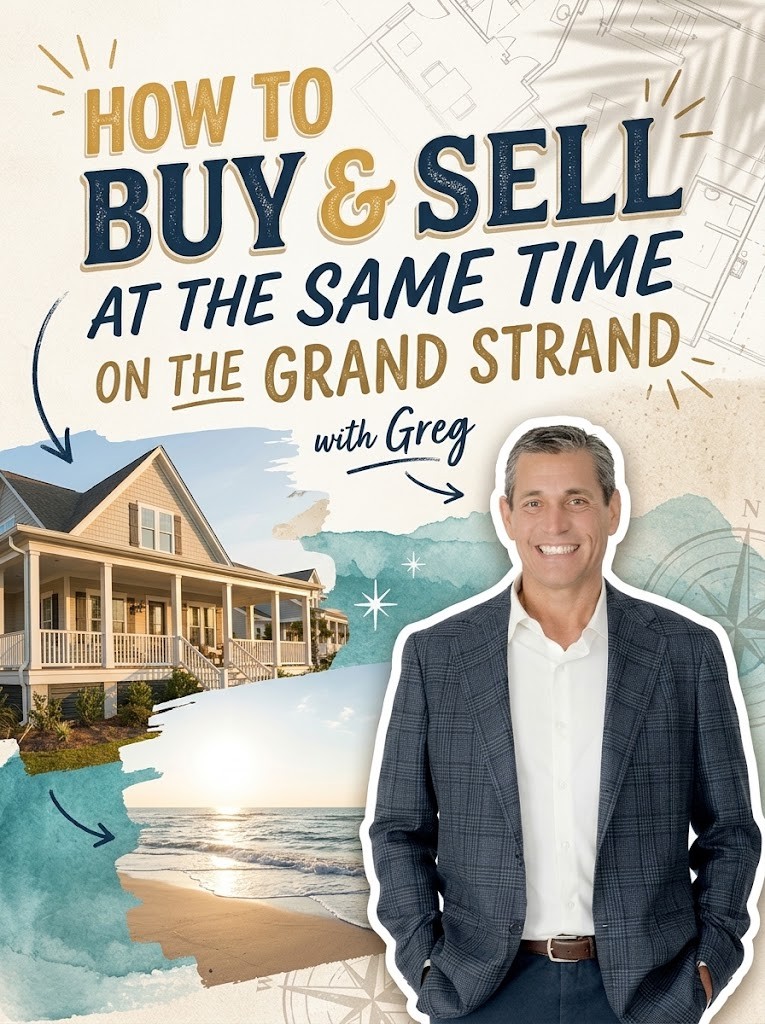
Greg Harrelson is a seasoned Realtor® with more than 30 years of experience serving the Myrtle Beach and Grand Strand markets. As the founder of Century 21 The Harrelson Group, Greg has built his career helping buyers, sellers, and investors achieve success in every corner of the coastal Carolina real estate market. His expertise spans residential homes, investment properties, land development, and coastal condos. Known for his deep local knowledge, innovative marketing strategies, and commitment to personal service, Greg consistently helps clients reach their real estate goals while navigating the ever-changing market with confidence and precision.