Few topics surprise new coastal buyers more than flood zones. If you're moving to the South Carolina coast from a state where flood insurance isn't part of everyday conversation, the FEMA flood map and the alphabet soup of zone designations can feel intimidating at first. The good news is that flood zones are not nearly as complicated as they look once you understand the basics. The risk picture, the insurance costs, and the impact on your purchase decision all come into focus quickly. If you're exploring homes for sale in North Myrtle Beach or anywhere along the Grand Strand, understanding flood zones is one of the smartest moves you can make before going under contract.
Why Flood Zones Matter When You Buy on the Coast
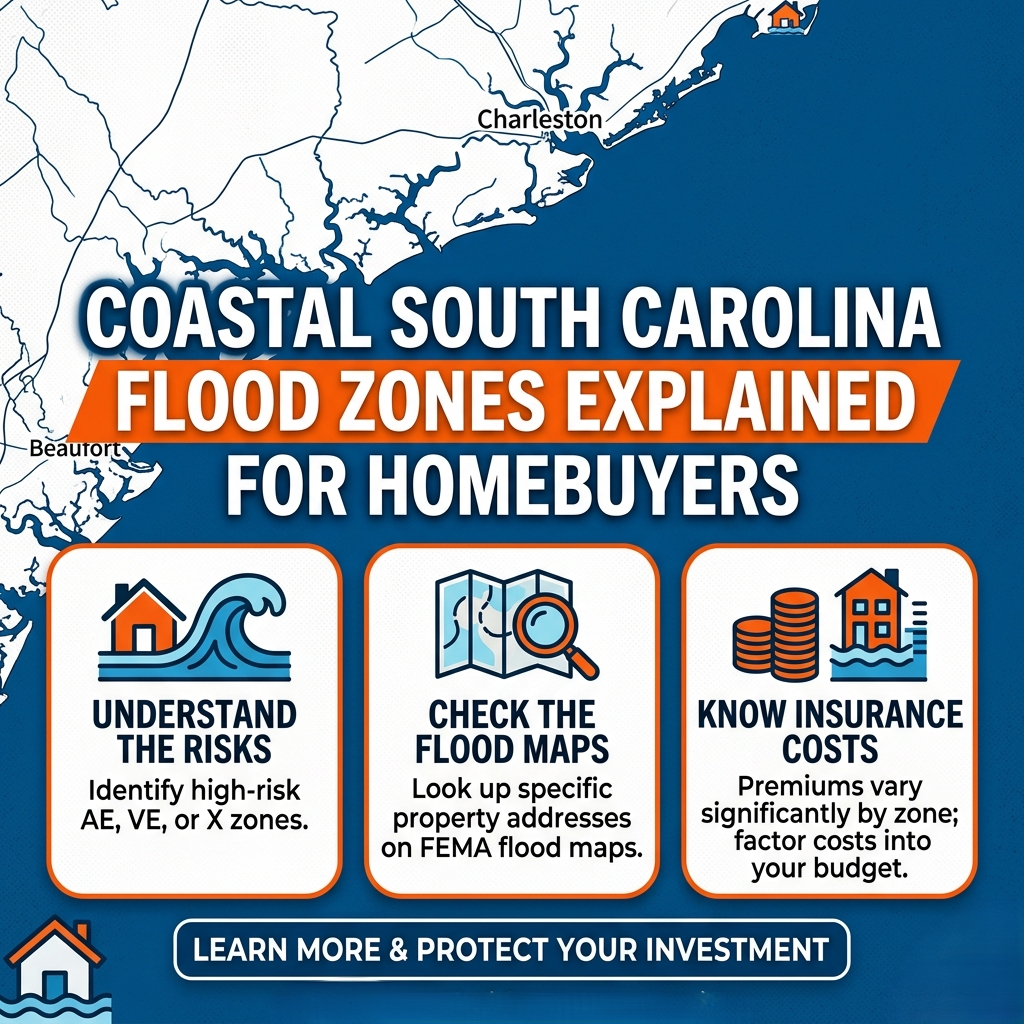
Flood zones are FEMA's way of describing the statistical likelihood that a given piece of land will flood. Coastal property is almost always classified into one of several flood zones, and the zone affects your insurance options, your insurance cost, what your lender will require, and how the home is going to perform in major storms. None of that should scare you away from the coast. It just needs to be understood and priced into your decision.
The Connection to Your Mortgage and Insurance
If you're financing a coastal property and the home sits in a high-risk flood zone, your lender will almost always require flood insurance as a condition of closing. Cash buyers are not required to carry flood insurance, but most still do, because the cost of being uninsured during a major storm dwarfs the cost of a policy. Either way, the flood zone designation drives the conversation.
How Flood Zones Are Classified
FEMA divides land into flood zones based on flood risk. The designations follow a fairly straightforward letter system once you know what to look for.
High-Risk Zones, Including A and V
Zones that start with A or V are considered high-risk, called Special Flood Hazard Areas. V zones are typically right along the coast where wave action and storm surge are a factor. A zones are inland areas with significant flood risk, often along rivers, marshes, and low-lying inland regions. Homes in these zones almost always require flood insurance if they are financed, and premiums tend to be higher than in lower-risk zones.
Moderate-to-Low-Risk Zones, Including X
X zones, including shaded X designations, are considered lower risk. Flood insurance is typically not required by lenders in these zones, but it remains available and is often inexpensive. Many coastal owners in X zones still buy a policy because storms occasionally produce flooding outside the high-risk zones, and the premiums are reasonable.
Why Two Homes on the Same Block Can Have Different Zones
One of the most surprising parts of flood zones is how quickly they can change from one side of a street to another. Elevation, drainage patterns, and historical data all factor in. Two homes can look almost identical and carry very different flood designations, insurance costs, and lender requirements. This is why pulling the flood zone for the specific property is one of the first things buyers should do.
What Flood Zones Mean Along the Grand Strand
The Grand Strand covers a wide range of coastal geography, and flood zones reflect that variety.
Oceanfront and Near-Dune Properties
Properties closest to the ocean, including most North Myrtle Beach oceanfront homes and second-row properties, frequently sit in V or A zones. These designations reflect the real risk of wave action and storm surge during hurricanes and major storms. Newer construction in these zones is typically built on pilings well above base flood elevation, which both reduces flood risk and lowers insurance premiums.
Cherry Grove Channels and Tilghman Marshes
The marsh and channel areas behind the dunes have their own flood zone footprint. Properties along the Cherry Grove channel system and the marshes near Tilghman Point often carry A zone designations, with significant variation based on elevation. Buyers should not assume a marsh-side home is lower risk than an oceanfront home. Sometimes it is, sometimes it isn't.
Inland and Higher-Elevation Areas
Properties further inland, including parts of Longs, Loris, and the higher-elevation portions of North Myrtle Beach, often sit in X zones. These properties typically have the lowest flood insurance costs and the easiest financing path on the coast, while still putting buyers within a short drive of the beach.
Flood Insurance Costs and What to Expect
Flood insurance is its own world, separate from homeowners insurance and wind and hail coverage. Pricing has evolved significantly over the past few years as FEMA has moved to its Risk Rating 2.0 system.
NFIP Versus Private Flood Insurance
The National Flood Insurance Program, run by FEMA, has long been the primary source of flood policies. In recent years, private flood insurance carriers have entered the market and are now competitive with NFIP on many coastal homes. Getting quotes from both NFIP and at least one private carrier is smart practice before closing.
How Elevation Affects Premiums
The single biggest factor in your flood insurance premium is the home's elevation relative to base flood elevation. Homes built well above the required elevation typically receive significant discounts. Homes built at or below base flood elevation pay more. An elevation certificate from a licensed surveyor is one of the most valuable documents a coastal owner can have.
Coverage Limits and Gaps
NFIP residential policies cap coverage at $250,000 for the structure and $100,000 for contents. For higher-value coastal homes, that's not enough, so owners often add excess flood coverage through private carriers. Reviewing total coverage with your insurance broker before closing avoids unpleasant surprises later.
Practical Steps Before Making an Offer
Smart coastal buyers don't wait until under contract to understand their flood exposure. The work pays off in better negotiation and fewer surprises.
Pull the Flood Map Early
Ask your agent to pull the FEMA flood zone for any property you're seriously considering, ideally before you make an offer. The zone affects pricing, insurance, and financing.
Get an Insurance Quote Before You Commit
An insurance broker can give you a flood quote in advance based on the address, flood zone, and elevation certificate if one exists. This becomes part of your total cost of ownership calculation rather than a surprise after closing.
Verify Insurance Availability
In some communities, especially older condo buildings, the master flood policy carried by the HOA covers the structure. Owners may still want supplemental contents coverage. Understanding what's covered by the HOA versus what falls on you is part of standard diligence in any coastal condo purchase.
Coastal Insurance Is Part of the Bigger Picture
Flood insurance is one piece of the coastal insurance puzzle, alongside homeowners and wind and hail coverage. Coastal buyers benefit from working with a local insurance broker who understands all three, because a smart combination of policies often produces stronger protection at lower cost than buying each policy separately. To get up to speed on the broader insurance landscape, including how Myrtle Beach property insurance works, lean on local resources rather than national averages.
Key Takeaways
- FEMA flood zones describe the statistical risk that land will flood, and the zone designation drives insurance requirements, premiums, and lender expectations for coastal property
- V and A zones are considered high-risk Special Flood Hazard Areas where financed homes will typically require flood insurance, while X zones are lower risk and often have inexpensive optional policies
- Flood zones can change from one parcel to the next, so the specific property's designation must be verified rather than assumed based on the neighborhood
- Elevation is the single biggest factor in premium cost, and an elevation certificate is one of the most valuable documents a coastal owner can have
- Pull the flood zone, get an insurance quote, and verify what's covered by HOA master policies before going under contract on any coastal home
Frequently Asked Questions
What is a flood zone?
A flood zone is a FEMA designation that describes the statistical likelihood that a piece of land will flood. Zones starting with A or V are considered high-risk Special Flood Hazard Areas, while X zones are considered moderate to low risk. Flood zones are mapped on the FEMA Flood Insurance Rate Map for each community.
Is flood insurance required on coastal South Carolina homes?
Flood insurance is required by lenders on financed properties located in high-risk flood zones, typically those starting with A or V. Cash buyers are not legally required to carry flood insurance, but most still purchase a policy because the cost of major flood damage far exceeds the premium. Homes in X zones often do not require flood insurance for financing, though policies are still available and often inexpensive.
How much does flood insurance cost on the Grand Strand?
Flood insurance premiums vary significantly based on the flood zone, the home's elevation, the coverage limits, and whether the policy is from NFIP or a private carrier. Homes in lower-risk X zones may pay only a few hundred dollars per year, while oceanfront homes in V zones can pay several thousand. Getting a property-specific quote before closing is the only reliable way to know.
What is an elevation certificate?
An elevation certificate is a document prepared by a licensed surveyor that shows the elevation of a home relative to FEMA's base flood elevation. The certificate is used by insurance carriers to calculate flood premiums. Homes built well above base flood elevation often receive significant premium discounts, which makes the certificate one of the more valuable documents a coastal owner can have on file.
Can flood zones change?
Yes. FEMA periodically updates flood maps based on new data, drainage improvements, elevation changes, and other factors. A home that was once in an X zone can be re-mapped into an A zone, or vice versa. Buyers and owners should check the current flood zone designation rather than relying on older information.
About Greg Harrelson
Greg Harrelson is a seasoned Realtor® with more than 30 years of experience serving the Myrtle Beach and Grand Strand markets. As the founder of Century 21 The Harrelson Group, Greg has built his career helping buyers, sellers, and investors achieve success in every corner of the coastal Carolina real estate market. His expertise spans residential homes, investment properties, land development, and coastal condos. Known for his deep local knowledge, innovative marketing strategies, and commitment to personal service, Greg consistently helps clients reach their real estate goals while navigating the ever-changing market with confidence and precision.