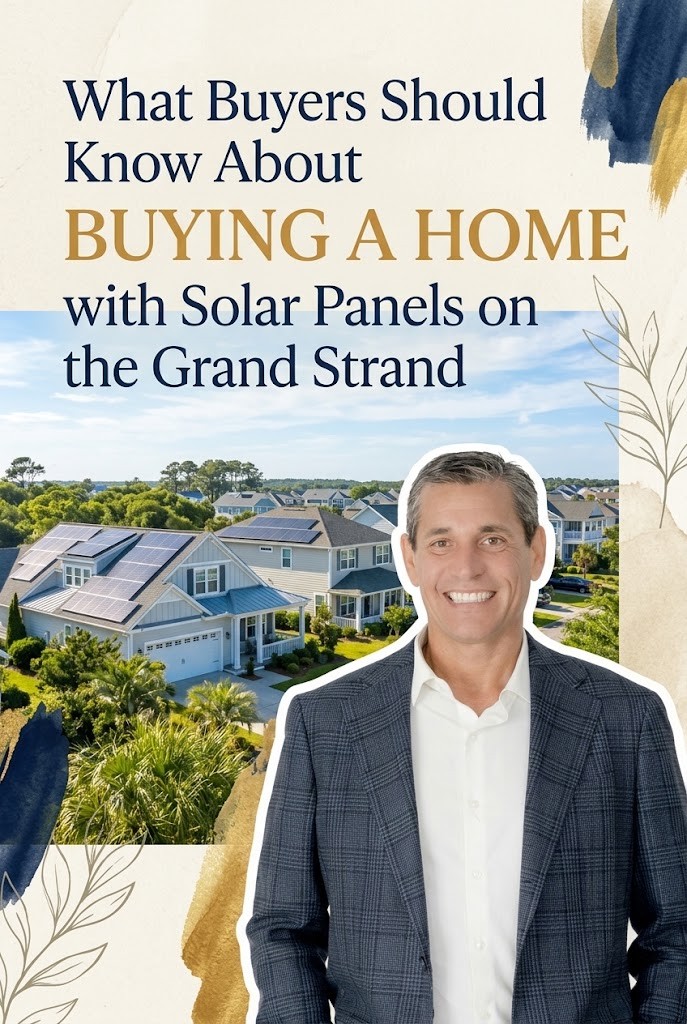
A few years ago, solar panels on a Grand Strand listing were rare enough to start a conversation at a showing. Today I see them regularly, especially in newer subdivisions in Longs, Little River, and around Carolina Forest. Buyers usually have one of two reactions. Some are excited about lower power bills. Others worry the panels are a headache they do not want to inherit.
Both reactions make sense. Whether solar is a plus or a problem depends almost entirely on a few details that are easy to check if you know to ask.
The First Question: Owned or Leased?
This is the question that matters most. Everything else follows from it.
Owned Systems
If the seller paid cash for the system or financed it with a loan that will be paid off at closing, the panels are part of the house. You get the equipment and whatever savings it produces. Ask for the purchase paperwork, the installer's name, warranty documents, and a year or two of utility bills so you can see the real-world impact.
Financed Systems with a Lien
Some solar loans are secured by a UCC filing or a lien tied to the property. That debt typically needs to be paid off or properly handled before closing. Your closing attorney will catch recorded filings, but it helps to raise it early so the payoff does not become a last-minute scramble.
Leased Systems and Power Purchase Agreements
With a lease or a power purchase agreement, a solar company owns the equipment and the homeowner pays a monthly amount or buys the power the panels produce. If you buy the house, you will usually be asked to take over that agreement. That means a credit approval with the solar company, a set monthly payment, and a contract that may run for many more years.
Read the lease before you write an offer if you can. Look at the remaining term, the payment and any annual escalator, what happens at the end of the term, and whether there is a buyout option. Some buyers are fine with the arrangement. Others negotiate for the seller to buy out the lease as part of the deal.
Roof Age Matters More Than Usual
On the coast, roofs work hard. Salt air, intense sun, and the occasional tropical storm take a toll. If the roof under the panels is nearing the end of its life, replacing it means removing and reinstalling the solar array, which adds real cost.
I always suggest buyers ask when the roof was installed relative to the panels. A new roof put on right before the solar installation is ideal. A 15-year-old roof with 5-year-old panels is a conversation to have before the inspection period ends.
Insurance and Storm Questions
Before you finalize anything, call your insurance agent. Ask whether the panels are covered under the dwelling portion of the policy, whether coverage changes if the system is leased, and how wind or hail damage to the array would be handled. Coastal insurance is already the biggest carrying cost surprise for many buyers here. Our page on Myrtle Beach property insurance is a good starting point for that conversation.
It is also worth asking the installer or seller how the panels are mounted and whether the system was installed to current wind load standards. Most reputable installers in coastal South Carolina design for our conditions, but it is a fair question.
Understanding the Savings
Solar savings depend on system size, roof orientation, shading, household usage, and how your electric provider credits excess power. Depending on where the home is, it may be served by Santee Cooper, Horry Electric Cooperative, or Duke Energy, and each has its own rules for net metering and interconnection. Those rules can change over time, so do not assume the seller's arrangement will carry forward on identical terms.
The most honest number is a year of actual utility bills from the current owner. Compare those to similar homes without solar in the same neighborhood. Comparable homes in newer subdivisions like Bradford Meadows in Longs or Carolina Crossing in Little River make that comparison easier because floor plans and build quality are similar.
Appraisals and Solar
Owned solar can add value, but appraisers need supporting data to give it credit. Leased systems generally do not add value because the buyer does not own the equipment. If the panels are owned, give the appraiser the documentation on system size, age, and cost. That helps the appraisal reflect what the system is actually worth.
Considering New Construction with Solar
Some builders now offer solar as an option or include it in certain plans. If you are shopping new construction in North Myrtle Beach and the surrounding area, ask whether the system is owned outright, financed through the builder, or leased through a third party. The answer changes the math considerably.
Key Takeaways
- Find out early whether the solar system is owned, financed with a lien, or leased. That determines what you are really buying.
- Leased systems usually require you to qualify with the solar company and take over the remaining contract.
- Check the age of the roof under the panels, since replacing it later means removing the array.
- Call your insurance agent and review a year of utility bills before relying on projected savings.
Frequently Asked Questions
Do solar panels increase home value on the Grand Strand?
Owned systems can add value when there is good documentation and comparable sales support it. Leased systems generally do not, because the equipment belongs to the solar company. The impact varies by neighborhood and price range.
Can I refuse to take over a solar lease?
You can negotiate it. Some sellers agree to buy out the lease before closing so the buyer receives the home free of the contract. Address it in the offer rather than waiting until after the inspection.
Will solar panels affect my homeowners insurance?
They can. Some carriers include owned panels in dwelling coverage, while others have specific requirements or exclusions. Leased systems may be insured by the solar company instead. Confirm details with your agent before closing.
Should I have the solar system inspected?
Yes, if possible. A general home inspector will note visible issues, but a solar installer or specialist can check performance, wiring, and mounting. It is a modest cost compared to the size of the system.
About Greg Harrelson
Greg Harrelson is a seasoned Realtor® with more than 30 years of experience serving the Myrtle Beach and Grand Strand markets. As the founder of Century 21 The Harrelson Group, Greg has built his career helping buyers, sellers, and investors achieve success in every corner of the coastal Carolina real estate market. His expertise spans residential homes, investment properties, land development, and coastal condos. Known for his deep local knowledge, innovative marketing strategies, and commitment to personal service, Greg consistently helps clients reach their real estate goals while navigating the ever-changing market with confidence and precision.