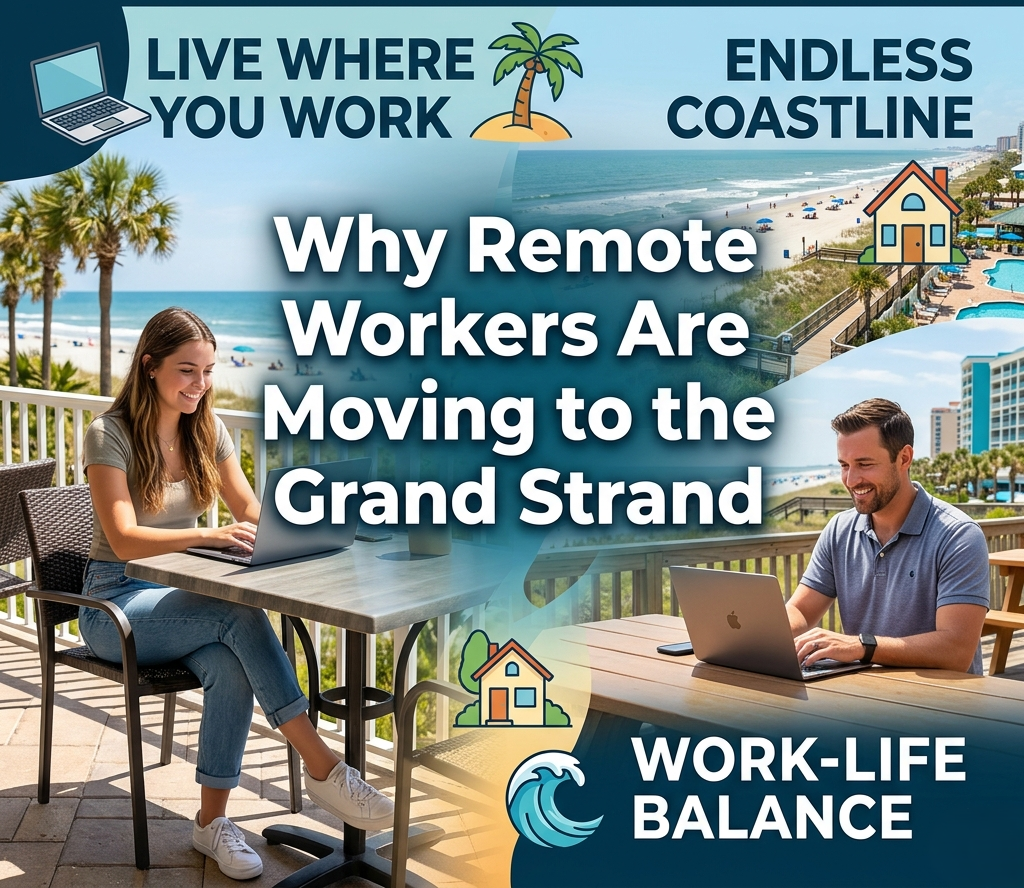
The Grand Strand has quietly become one of the most attractive remote-work markets on the East Coast. Buyers who could once only dream about coastal living are realizing that working from anywhere means they can live anywhere, and a growing share of them are landing in North Myrtle Beach, Conway, Little River, and the surrounding submarkets. The reasons are not romantic. They are practical. The lifestyle, the cost of living, the connectivity, and the time-zone alignment all line up better here than in most coastal alternatives.
Why the Grand Strand Has Become a Remote-Work Magnet
Remote workers are picky for a reason. Their home has to function as their office. The Grand Strand happens to check the right boxes.
Cost of Living Compared to Other Coastal Markets
Compared to Florida coastal markets, the Northeast corridor, or coastal California, the Grand Strand still delivers a meaningfully lower cost of living. Property prices, taxes, and groceries are all comparatively favorable. Remote workers with portable incomes get more home and more lifestyle for the same paycheck.
Time Zone and Connectivity
The Grand Strand sits in the Eastern Time Zone, which keeps remote workers aligned with most U.S. corporate calendars. High-speed internet is available across most of the region, with newer subdivisions offering fiber connections that handle video calls and large file transfers comfortably.
Lifestyle Margin
For remote workers, the value of the home is partly the lifestyle around it. A morning walk on the sand, a lunch break at a marina, or an afternoon kayak on the Waccamaw River is a real advantage that traditional offices cannot offer.
Where Remote Workers Are Choosing to Buy
Remote workers tend to make different choices than vacation buyers or retirees.
Inland Communities for Home Office Space
The single biggest remote-worker shift in the area has been inland. Buyers who need a real dedicated office, plus space for a partner who may also work from home, tend to choose inland Horry County. Conway, Longs, and Loris offer single-family homes with the square footage and yard space to support a real home office setup.
Beach Communities With Year-Round Character
Remote workers who want the beach lifestyle full-time tend to gravitate toward the more residential stretches of North Myrtle Beach and Little River. Both areas have a strong year-round community feel that does not empty out when the tourists leave.
Townhomes and Condos for Single Remote Workers
Single remote workers or couples without kids often choose lower-maintenance townhomes and condos. For background on this product type, see our blog on condo vs single-family home on the Grand Strand.
What Remote Workers Should Think About Before Buying
Remote-work-friendly homes have their own checklist.
A Real Home Office
A dedicated office with a door is meaningfully different from a desk in a guest room. Remote workers should look at floor plans through the lens of how they actually work and how they will share the space with a partner, kids, or pets.
Reliable Internet at the Specific Address
Coverage is generally strong in the region, but it varies by exact address. Before making an offer, confirm what is actually available at the property, not what is theoretically available in the zip code.
Power and Storm Reliability
Remote workers cannot afford long power outages. Generator-ready electrical panels, surge protection, and backup power planning matter more for remote workers than for traditional office commuters.
Community Lifestyle Fit
Some communities are heavily second-home and snowbird-driven, which means a quieter year-round social scene. Other communities have strong full-time resident populations. The right fit depends on the worker.
How Remote Workers Should Think About Timing
Remote workers have more flexibility than most buyers and should use it.
Visit Across Seasons
The Grand Strand in October feels very different from the Grand Strand in July. Remote workers who can spend time in the area across multiple seasons make stronger long-term decisions.
Rent Before Buying
Some remote workers rent for three to six months before committing. This is a low-risk way to confirm that the lifestyle, the internet, and the community fit before signing on a 30-year mortgage.
Key Takeaways
The Grand Strand has matured into a real destination for remote workers, not just retirees. The combination of cost of living, connectivity, lifestyle margin, and East Coast time zone alignment delivers a package that few coastal markets can match.
- Cost of living, time zone, and connectivity make the Grand Strand a strong remote-work destination
- Inland Horry County, including Conway, Longs, and Loris, leads for home office space and square footage
- Beach communities like North Myrtle Beach and Little River support a year-round lifestyle for those who want sand within walking distance
- Dedicated office space, address-specific internet, power reliability, and community fit should drive the home selection
The smart path for remote workers is to clarify their work needs first, then layer in the lifestyle factors that make the Grand Strand worth choosing in the first place.
About Greg Harrelson
Greg Harrelson is a seasoned Realtor® with more than 30 years of experience serving the Myrtle Beach and Grand Strand markets. As the founder of Century 21 The Harrelson Group, Greg has built his career helping buyers, sellers, and investors achieve success in every corner of the coastal Carolina real estate market. His expertise spans residential homes, investment properties, land development, and coastal condos. Known for his deep local knowledge, innovative marketing strategies, and commitment to personal service, Greg consistently helps clients reach their real estate goals while navigating the ever-changing market with confidence and precision.