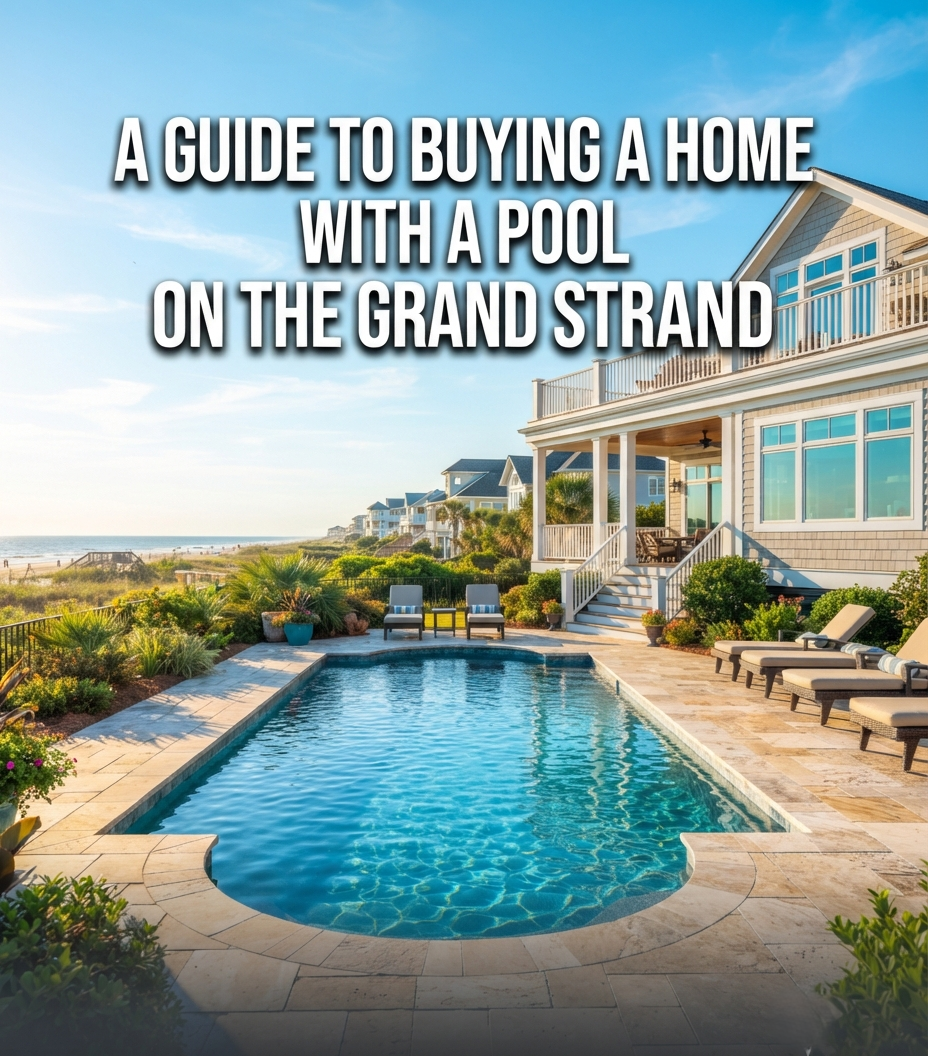
Homes with pools stay in strong demand across the Grand Strand. Between the summer heat, the coastal lifestyle expectation, and the vacation rental market, a private pool is one of the most-requested features from buyers. But pool ownership on the coast comes with its own realities. Salt air, higher maintenance costs, and insurance considerations all matter more here than they would inland. Below is a practical guide to buying a home with a pool on the Grand Strand and what to think about before you close.
Why Pool Homes Are So Popular Here
Pool demand on the Grand Strand is not seasonal. It runs through the whole year.
Six Months of Real Pool Weather
The Grand Strand has enough warm weather that a pool is a real asset, not just a summer novelty. Owners use their pools well beyond peak summer, especially with heaters.
Vacation Rental Advantage
Vacation renters actively search for homes with pools. A private pool can meaningfully lift a home's nightly rate and occupancy. For background, see our blog on what buyers should know before purchasing a vacation rental.
Family Buyer Preference
Families relocating to the Grand Strand often prioritize pool homes when kids are in the mix. A backyard pool changes daily life in real ways.
Where Pool Homes Cluster
Pool inventory concentrates in specific submarkets.
Established NMB Residential Streets
Larger residential lots in North Myrtle Beach support single-family pool homes. Ocean Drive, Windy Hill, and Cherry Grove all have pool inventory in the mix.
Inland Larger Lots
Inland Horry County, particularly Conway and Longs, produces pool homes at lower price points than the beach corridor. Lot sizes are generally larger, which fits pools well.
Amenity Communities
Buyers who want pool access but do not want to own one often choose amenity-driven communities with shared pools. This is common at Barefoot Resort and similar developments. For background, see our blog on why Barefoot Resort continues to attract buyers.
What Pool Buyers Should Look at Carefully
Pool diligence goes beyond the pool.
Pool Age and Condition
Pool shells, tile, coping, and equipment all have finite useful lives. A pool nearing the end of its major-component life is a real future expense. Ask when the pool was resurfaced, when the pump was replaced, and when the filter was serviced.
Salt vs Chlorine Systems
Salt water pools are common on the Grand Strand and often more comfortable to swim in. Chlorine pools have their own advantages. Neither is objectively better, but the maintenance profile differs.
Heating Setup
A heated pool extends the usable season meaningfully. Heaters run on natural gas, propane, or electricity. Understanding the setup, condition, and expected energy costs matters for budgeting.
Screen Enclosures and Cages
Screen enclosures are less common here than in Florida but do appear. They add usable enjoyment and keep debris out but require their own maintenance and, in coastal wind, occasional repair or replacement. For background on the coastal exposure story, see our blog on how salt air affects coastal properties.
Fencing and Safety Code Compliance
Local codes require specific pool fencing standards. Confirm the property is compliant, and know that insurance and eventual resale may be affected if it is not.
Insurance Considerations for Pool Homes
Pools add insurance nuance.
Liability Coverage
Pool owners typically want to review their liability coverage limits. An umbrella policy is worth discussing with your insurance agent, particularly for owners who plan to entertain or rent.
Wind and Storm Considerations
Storm-related pool damage from debris or flooding can be significant. Understand what your homeowners policy covers and what falls outside. For background, see our blog on what wind and hail insurance covers in coastal South Carolina.
Vacation Rental Liability
Owners renting their pool home short-term should ensure their landlord policy or short-term rental policy covers pool-related risks specifically. Standard homeowners policies often exclude rental use.
Ongoing Cost of Pool Ownership
Pool costs are steady even outside surprise repairs.
Regular Maintenance
Weekly cleaning, chemical balancing, and periodic equipment servicing add up. Owners can self-manage, but many hire a pool service, which typically runs a manageable monthly cost.
Utility Costs
Pumps, heaters, and lighting use electricity and sometimes gas. Model the utility impact honestly in your budget.
Long-Cycle Capital Costs
Resurfacing, replastering, equipment replacement, and deck refinishing all show up on multi-year cycles. Setting aside a small monthly reserve is a smart move.
Key Takeaways
- Pool homes on the Grand Strand deliver a strong lifestyle payoff and a real vacation rental advantage but come with unique diligence and cost considerations
- Larger residential NMB lots, inland Conway and Longs, and amenity-community access are the three main paths to pool ownership
- Pool age and condition, heating setup, fencing compliance, and insurance handling all matter more than typical buyers assume
- Ongoing maintenance, utility costs, and long-cycle capital reserves belong in the annual budget from year one
A pool can be one of the best lifestyle enhancements on a coastal Carolina home. Buyers who go in with clear eyes on the costs and the diligence usually love the outcome.
About Greg Harrelson
Greg Harrelson is a seasoned Realtor® with more than 30 years of experience serving the Myrtle Beach and Grand Strand markets. As the founder of Century 21 The Harrelson Group, Greg has built his career helping buyers, sellers, and investors achieve success in every corner of the coastal Carolina real estate market. His expertise spans residential homes, investment properties, land development, and coastal condos. Known for his deep local knowledge, innovative marketing strategies, and commitment to personal service, Greg consistently helps clients reach their real estate goals while navigating the ever-changing market with confidence and precision.