Flood insurance is the line item that surprises more North Myrtle Beach buyers than almost anything else. People budget for the mortgage, taxes, and homeowners coverage, then learn late in the process that a standard homeowners policy does not cover flood damage at all. Sometimes that discovery happens after they have already fallen in love with a house.
The good news is that flood insurance is easy to understand once you know the basic pieces. Here is what I tell buyers before they start writing offers.
Why Flood Insurance Matters in North Myrtle Beach
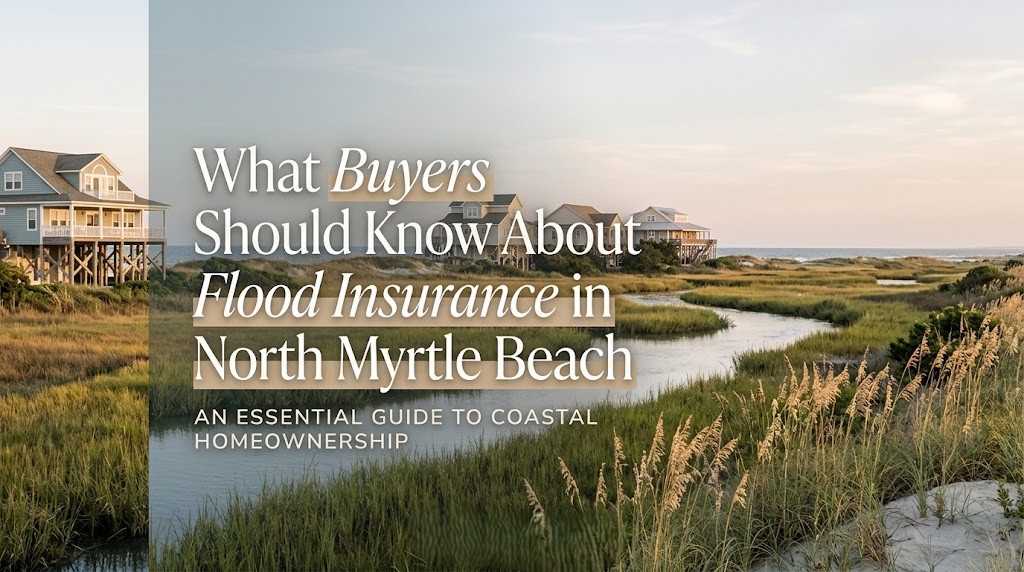
North Myrtle Beach is a barrier-style coastal city with the ocean on one side and tidal marsh, canals, and the Intracoastal Waterway on the other. That gives us great views and great boating, but it also means a lot of properties sit in mapped flood zones. Heavy rain, storm surge, and high tides can all cause water to reach places that look perfectly dry on a sunny day.
You do not have to be on the oceanfront to be affected. Some of the questions I get most often come from buyers looking at homes in Cherry Grove near the channel, and from condo buyers who assume the building takes care of everything. If you are looking at Cherry Grove channel homes or other waterfront property, flood coverage should be part of your first conversation.
Understanding the Basics
Flood Zones
FEMA maps divide properties into flood zones. Higher-risk zones, often labeled with an A or V, generally require flood insurance if you have a federally backed mortgage. Lower-risk zones may not require it, but that does not mean the risk is zero. Plenty of flood claims come from properties outside the highest-risk zones.
Where Coverage Comes From
Flood policies can come from the National Flood Insurance Program or from private insurers. Each has different coverage limits, waiting periods, and pricing. A good local insurance agent can quote both and explain the differences so you are comparing real options, not just prices.
What Flood Insurance Does Not Do
Flood insurance is separate from wind and hail coverage, and separate from your regular homeowners policy. On the coast, you may be managing three different policies. Our post on wind mitigation inspections and insurance savings explains one way to bring wind costs down.
Costs, Risks, and Practical Considerations
The price of a flood policy depends on several property-specific factors, including elevation, foundation type, how close the home is to water, and the building's flood history. Two houses on the same street can be priced very differently. That is why I ask buyers to get a quote on the actual address before they make an offer, not after.
The elevation certificate is one of the most useful documents in the process. It records the home's elevation relative to the expected flood level, and it can have a real effect on your premium. If the seller has one, ask for it. If not, find out whether one can be obtained during your due diligence.
Here is my first local observation. Buyers often assume that an older home is automatically a higher premium. In practice, I have seen older raised homes quote better than newer ground-level homes, because elevation matters more than age. It pays to compare, not guess. See our guide on buying a home with an elevated foundation for more on that.
Condo Buyers
If you are buying a condo, the association's master policy usually covers the building structure, but what it covers and how much it covers varies. Your own policy may need to cover the interior, your belongings, and your share of any special assessment. Ask the association for the master policy details, and review them with your insurance agent. Our post on coastal HOA master insurance policies walks through what to look for.
Local Lifestyle and Community Appeal
Living near the water is why most of us are here, and flood risk is part of that tradeoff. Longtime owners tend to prepare in simple ways: they know their zone, they keep their policy current, they move vehicles and valuables ahead of big storms, and they stay in touch with neighbors. It becomes routine, not stressful.
Second observation: owners who bought their coverage early almost never regret it, and owners who put it off almost always wish they had acted sooner. Some flood policies have a waiting period before they take effect, so timing matters.
Strategy for Buyers
Start by looking up the flood zone for each property you are considering. Request the elevation certificate. Get at least two insurance quotes, including one from a private carrier if possible. Add the flood premium to your monthly budget before you decide how much house you can afford, and talk with your lender about how the coverage will affect closing. Our local North Myrtle Beach home loans page is a helpful place to begin that conversation.
It also helps to browse with insurance in mind. Looking at North Myrtle Beach homes for sale by elevation and distance from the water can narrow your list quickly.
Key Takeaways
- Standard homeowners insurance does not cover flood damage. Flood and wind are separate policies.
- Check the FEMA flood zone for every property and remember that damage can occur outside high-risk zones.
- Get a quote on the specific address before making an offer, and ask for the elevation certificate.
- Condo owners should review the master policy and understand what their own policy needs to cover.
- Add the flood premium to your monthly budget so you know what you can truly afford.
About Greg Harrelson
Greg Harrelson is a seasoned Realtor® with more than 30 years of experience serving the Myrtle Beach and Grand Strand markets. As the founder of Century 21 The Harrelson Group, Greg has built his career helping buyers, sellers, and investors achieve success in every corner of the coastal Carolina real estate market. His expertise spans residential homes, investment properties, land development, and coastal condos. Known for his deep local knowledge, innovative marketing strategies, and commitment to personal service, Greg consistently helps clients reach their real estate goals while navigating the ever-changing market with confidence and precision.