Hurricane season runs from June 1 through November 30 along the Carolina coast, and while the Grand Strand has been fortunate in many recent years, every coastal owner needs to take preparation seriously. The owners who do best are the ones who treat hurricane season as a yearly rhythm rather than a once-in-a-while scramble. Whether you own a primary residence, a second home, or a vacation rental, a thoughtful preparation routine protects the home, the people inside it, and the long-term value of one of your most important assets. If you live in or own one of the many homes for sale in North Myrtle Beach, here's a practical season-by-season approach.
Why Preparation Matters Along the Carolina Coast
Hurricanes and tropical storms create three types of damage along the coast. Wind tears at roofs, siding, and windows, especially on the most exposed properties like North Myrtle Beach oceanfront homes. Storm surge pushes salt water inland and damages structures and contents. Heavy rainfall causes flooding and water intrusion in areas that don't normally see it. A prepared home handles each of these threats better than an unprepared one, which protects both the property and the people inside.
The Insurance Connection
Strong preparation also matters at claim time. Carriers look favorably on owners who maintain the property well and take reasonable steps to mitigate damage. Knowing how your homeowners, wind and hail, and flood policies work together, as covered in resources on Myrtle Beach property insurance, is part of being fully prepared.
Early-Season Preparation
The most effective hurricane prep happens before a storm is on the radar. Owners who use the spring and early summer to take care of structural items end up with much less to do when an actual storm threatens.
Inspect the Roof
The roof is the most vulnerable part of any coastal home. Walk the property and look for loose or missing shingles, lifted flashing, cracked sealant, and worn fasteners. Even better, have a licensed coastal roofer do an annual inspection. Catching small issues now is far cheaper than repairing major damage after a storm.
Trim Trees and Limbs
Branches that overhang the home or the driveway become projectiles in high winds. Spring is the right time to remove anything that could cause damage during a storm. Pay special attention to pine trees, which are common along the coast and can fail in saturated soil conditions.
Check Windows and Doors
Test the operation of every window and door, replace any failing weatherstripping, and confirm that storm shutters or impact-rated glass are in good condition. Doors and windows are the most common entry points for both wind and water damage.
Service the HVAC and Generator
Coastal HVAC systems work hard during summer and even harder when humidity spikes during storms. A spring service appointment keeps performance high. If you have a generator, run it under load, check the fuel system, and confirm it starts reliably.
When a Storm Is Forecast
Once a named storm enters the Atlantic and starts to track toward the Carolina coast, your preparation shifts into active mode.
Secure the Exterior
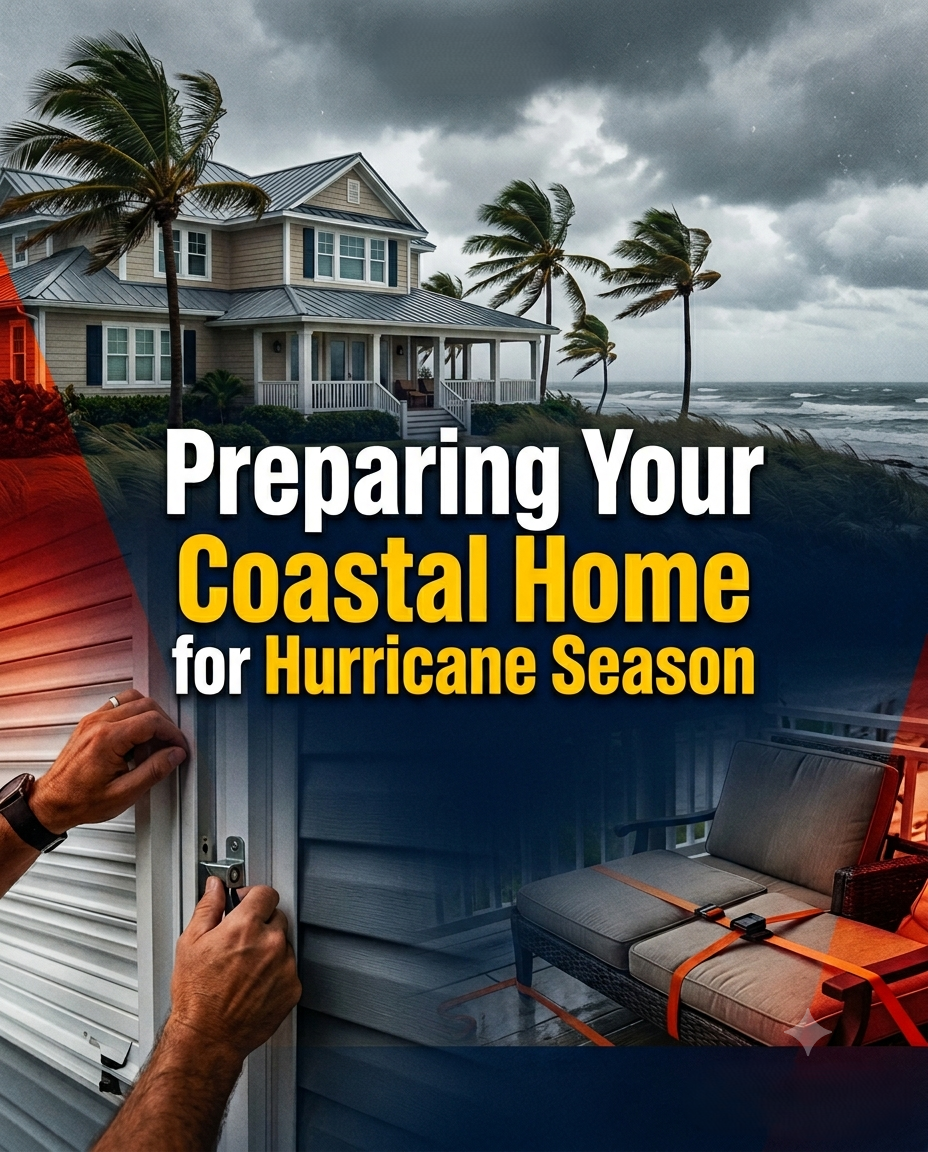
Bring inside or secure anything that could become airborne, including patio furniture, grills, planters, umbrellas, kayaks, and decorative items. Tie down anything that can't come inside. The simplest items become the most dangerous in 80-plus mile per hour winds.
Install Shutters or Cover Windows
If your home has hurricane shutters, install them before the storm arrives. If not, plywood cut to fit your windows is a workable backup, but it works only if it's pre-cut and labeled in advance. Trying to cut and install plywood the day before a storm with everyone else in line at the home improvement store is a losing strategy.
Top Off Fuel and Supplies
Fill vehicles and generator tanks early. Stock up on bottled water, non-perishable food, batteries, flashlights, a battery-powered radio, first aid supplies, and medications. Don't wait until the day before. Stores empty quickly when a major storm approaches the coast.
Document the Home
Walk through the home with your phone and record video of every room, including closets, the garage, and the exterior. Save the video to the cloud. If you need to file a claim later, this documentation is invaluable.
If You Are Evacuating
Evacuations on the Grand Strand happen periodically and should be taken seriously when they are ordered.
Leave Early
Traffic builds quickly during evacuations, and routes inland can become standstills the day before landfall. If you plan to evacuate, leave well before the official order if possible. Earlier means easier.
Shut Off Utilities If Advised
Follow guidance from the local utility company on shutting off power, gas, and water before leaving. In some flood-prone areas, shutting off main breakers can prevent electrical damage if water reaches outlets.
Bring Important Documents
Take insurance policies, identification, deeds, and other critical documents with you, ideally in a waterproof container or in cloud storage you can access from anywhere.
After the Storm
The work doesn't end when the storm passes. The first hours and days after landfall are when smart owners protect what they have.
Wait for Safety Clearance
Don't return until local officials say it's safe. Downed power lines, contaminated water, and damaged structures present real risks in the immediate aftermath.
Document Damage Before You Clean Up
Photograph and video every area of damage before you move debris or start repairs. Insurance carriers want this documentation, and good evidence speeds up claims.
Mitigate Further Damage
Tarp damaged roofs, board up broken windows, and remove standing water where you can. Carriers expect owners to take reasonable steps to prevent additional damage while waiting for adjusters.
Key Takeaways
Hurricane preparation is a yearly rhythm, not a last-minute scramble. Owners who maintain the roof, trim trees, service the HVAC, and address windows and doors during the spring put themselves in a far stronger position when a storm finally threatens. When a named storm enters the Atlantic, focus on securing the exterior, installing shutters, stocking supplies, and documenting the home. Evacuate early when ordered, protect critical documents, and remember that the work continues after the storm with careful damage documentation and timely mitigation. With the right preparation rhythm and the right insurance strategy, owning a coastal home along the Grand Strand remains both a wonderful lifestyle and a strong long-term investment.
Frequently Asked Questions
When is hurricane season in coastal South Carolina?
Atlantic hurricane season runs from June 1 through November 30, with the peak typically occurring from mid-August through October. The Grand Strand and broader Carolina coast can experience tropical storm and hurricane activity at any point during this period.
What is the best way to prepare a coastal home for a hurricane?
The best preparation combines yearly maintenance and active storm prep. Maintain the roof, trim trees, service the HVAC, and inspect windows and doors during the spring. When a storm is forecast, secure the exterior, install shutters, top off fuel and supplies, and document the home with photo and video.
Do I need flood insurance during hurricane season?
Flood insurance is strongly recommended for any coastal property, regardless of flood zone. Standard homeowners and wind and hail policies do not cover flood damage. The National Flood Insurance Program and private flood carriers both offer policies, and getting a property-specific quote before hurricane season is smart practice.
Should I evacuate if a hurricane is forecast?
Follow guidance from local officials. If an evacuation is ordered for your area, you should evacuate. Leaving early before official orders go into effect can help you avoid heavy traffic and ensure you reach a safe destination ahead of the storm.
What should I do right after a hurricane passes?
Wait for local officials to confirm it is safe to return. Document any damage thoroughly with photos and video before you begin cleanup. Tarp damaged roofs, board up broken windows, and remove standing water to mitigate further damage. Contact your insurance carrier promptly to begin the claim process.
About Greg Harrelson
Greg Harrelson is a seasoned Realtor® with more than 30 years of experience serving the Myrtle Beach and Grand Strand markets. As the founder of Century 21 The Harrelson Group, Greg has built his career helping buyers, sellers, and investors achieve success in every corner of the coastal Carolina real estate market. His expertise spans residential homes, investment properties, land development, and coastal condos. Known for his deep local knowledge, innovative marketing strategies, and commitment to personal service, Greg consistently helps clients reach their real estate goals while navigating the ever-changing market with confidence and precision.