Beach renourishment is one of those coastal topics buyers rarely think about until they own oceanfront property, and then it becomes very real very fast. The Grand Strand runs periodic renourishment projects that pump sand from offshore back onto eroding beaches. For property owners, these projects affect everything from beach width outside your unit to short-term construction disruption to long-term value. Buyers looking at oceanfront and front-beach product should understand how renourishment actually works before writing an offer.
What Renourishment Actually Is
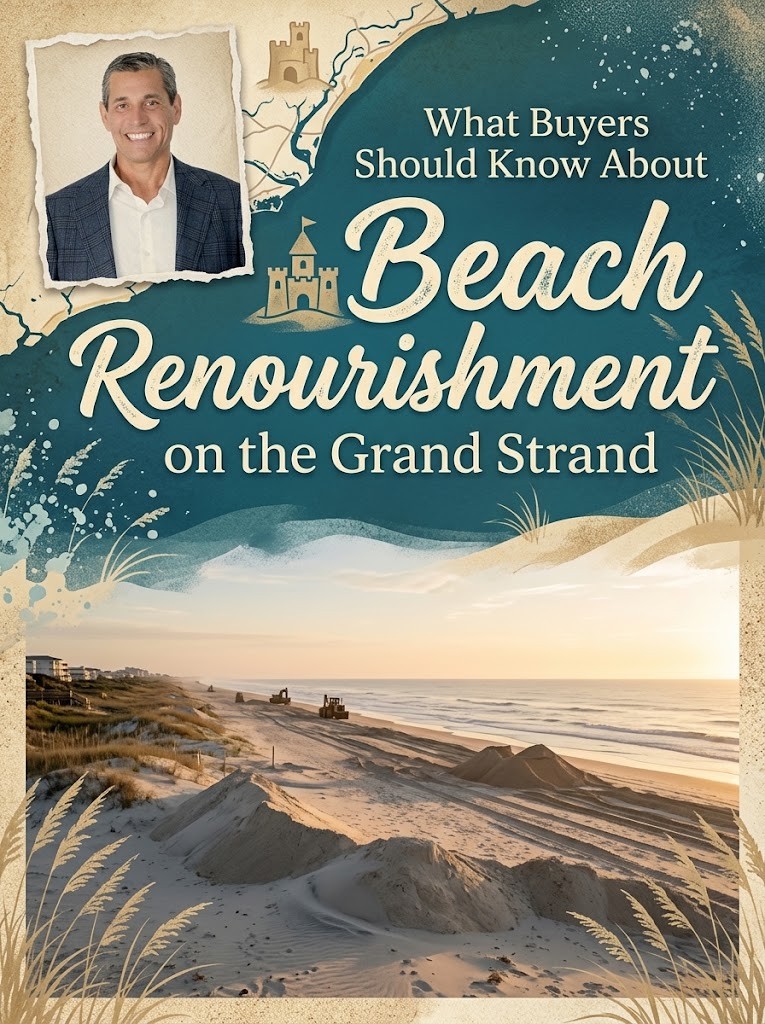
A renourishment project moves sand from a designated offshore source and deposits it back on the beach where erosion has removed it. Pipes, dredges, and heavy equipment do the work over a defined project window. The beach ends up wider, the dune line ends up more protected, and the community ends up with better storm resilience.
On the Grand Strand, projects are typically coordinated between federal, state, and local partners. Timing depends on funding cycles, permits, and identified erosion patterns.
 Why Renourishment Matters for Property Values
For oceanfront and near-beach owners, this is more than an engineering topic.
Beach Width Directly Affects the Product
The distance from your building to the water is part of what you're buying. A recently renourished beach delivers the wide, dry sand that oceanfront buyers pay a premium for. An eroded beach with waves reaching the dune base at high tide is a very different product.
Storm Resilience
Wider beaches absorb storm surge energy before it reaches structures. A well-renourished beach can meaningfully reduce damage to beachfront property during named storms.
Insurance and Financing
Coastal insurance underwriters pay attention to beach condition and erosion trends. Properties in areas with active renourishment programs sometimes get better insurance treatment than properties in chronic erosion zones.
What Buyers Should Actually Check
When Was the Last Renourishment?
Recent projects benefit the buyer. Projects completed a decade ago that are now overdue may be affecting current beach conditions.
Is Another Project Scheduled?
Upcoming renourishment brings both benefits and disruption. Owners in North Myrtle Beach oceanfront property should know whether a project is scheduled during their expected ownership window.
What Section of Beach Is Your Property On?
Erosion is not uniform. Some sections show accretion while others show chronic erosion. Beach condition today does not always predict beach condition in five years.
How Does the HOA Handle Assessments?
For condo owners, some renourishment costs pass through as HOA assessments. Understanding your building's exposure to these events is part of the diligence.
What Renourishment Feels Like When It's Happening
The construction period is not silent. Dredges offshore, pipelines running the sand onto the beach, bulldozers spreading it. Sections of beach are closed to public access during active work. The disruption typically lasts weeks per section. Twenty-four-hour operations are common. Beachfront owners often hear equipment through the night. Vacation rental owners should coordinate carefully during project windows.
Where Renourishment Is Most Relevant on the Grand Strand
Oceanfront Condos and Homes
The most directly affected. Buyers of oceanfront product should treat renourishment status as part of the property research.
Cherry Grove Beachfront and Channel Homes
Some sections near Cherry Grove channel homes and Cherry Grove beachfront are affected by renourishment cycles differently than the main NMB corridor.
Second-Row and Beach-Adjacent Product
Even second-row homes benefit from renourishment because a healthy beach protects the whole section. Owners of properties in Crescent Beach condos and similar beach-adjacent product should still understand the local erosion picture.
Insurance Context
Beach condition intersects with the coastal insurance stack. For a broader look at how coastal insurance works, see our blog on what wind and hail insurance covers in coastal South Carolina.
Key Takeaways
Beach renourishment is part of Grand Strand coastal ownership, not a background topic. Buyers of oceanfront and beach-adjacent property should know when the last project happened, whether one is scheduled, and how their specific section of beach has performed over time. A recently renourished beach delivers a better everyday product and better storm resilience. An overdue erosion zone is a warning that carries costs the buyer will inherit.
Frequently Asked Questions
Who pays for beach renourishment?
Grand Strand renourishment projects are typically funded through a mix of federal, state, and local sources. Some costs flow through to individual property owners via special assessments, particularly for condo buildings in some situations. Ask about local funding structure before assuming.
How often does the Grand Strand renourish?
Project timing depends on erosion rates, funding availability, and permit cycles. Some sections are renourished on roughly ten-year cycles. Others follow different schedules. Local government sites publish current project information.
Does renourishment affect my property value?
Yes. A wide, healthy beach supports oceanfront value. Chronic erosion without renourishment can hurt it. Buyers should factor recent project history into their pricing evaluation on beachfront and near-beach property.
Can I use the beach during a renourishment project?
Active project sections are closed to public access during work. The rest of the beach typically remains open. Timing and section-by-section closures are published in advance.
About Greg Harrelson
Greg Harrelson is a seasoned Realtor® with more than 30 years of experience serving the Myrtle Beach and Grand Strand markets. As the founder of Century 21 The Harrelson Group, Greg has built his career helping buyers, sellers, and investors achieve success in every corner of the coastal Carolina real estate market. His expertise spans residential homes, investment properties, land development, and coastal condos. Known for his deep local knowledge, innovative marketing strategies, and commitment to personal service, Greg consistently helps clients reach their real estate goals while navigating the ever-changing market with confidence and precision.