Testimonials and Reviews

Here are reviews and commendations from our clients about our professional agents with Barefoot Realty. If you would like to compliment one of our Realtors, please use our contact form on the website! Thank you!

July 10, 2026

A Guide to Buying a Second Home on the Grand Strand

Second home buying is one of the most common paths onto the Grand Strand. Buyers who fell in love with the area on a vacation, retirees planning ahead, and remote workers wanting a bolt-hole all end up asking the same question. What is the smart way to buy a second home here without overpaying, over-buying, or setting yourself up for the wrong long-term situation? The Grand Strand has enough submarkets, product types, and buyer profiles that the honest answer takes some unpacking. Below is a practical guide to how to approach the process.

Why the Grand Strand Works for Second Homes

The math for second-home buyers on the Grand Strand is different from most coastal markets.

Cost Relative to Other Coastal Markets

Compared to Florida coastal markets, the Mid-Atlantic shore, or the West Coast, the Grand Strand still delivers a meaningfully lower entry price for comparable lifestyle. Second-home buyers can find product at price points that would be entry-level in most other coastal areas.

Drivable From Major Northeast and Midwest Metros

A large share of second-home buyers here come from the Northeast, Mid-Atlantic, and Midwest. The Grand Strand is drivable from most of these markets in a day, which matters more than out-of-state buyers realize until they own the home.

Real Rental Market Where Wanted

Second-home buyers who want their unit to help pay for itself have options. The vacation rental market is deep, especially in North Myrtle Beach oceanfront and Cherry Grove.

Decide Why You Want a Second Home Before You Shop

The single biggest mistake second-home buyers make is skipping this step.

Pure Personal Use

If the goal is a private retreat that you and your family use exclusively, you optimize for lifestyle fit and long-term hold cost. Rental income is not part of the decision.

Hybrid Personal Use and Rental

If you plan to rent when not using it, the calculus shifts. Location, HOA rental rules, and product type all become part of the decision. For background, see our blog on what buyers should know before purchasing a vacation rental.

Future Primary Residence

Many second-home buyers eventually shift the property into a primary residence. If that is on the horizon, buy for that eventual use case, not just for weekend visits. The tax treatment also changes meaningfully when the property becomes primary. For background, see our blog on understanding property taxes in Horry County.

Where Second-Home Buyers Are Finding the Best Fit

Different second-home buyers gravitate toward different submarkets.

Beach-Focused Buyers

Buyers who want the beach lifestyle look at North Myrtle Beach oceanfront and residential beach sections. For a spotlight on one of the most loved sections, see our blog on what it is like to live full-time in Cherry Grove, SC.

Boating and Water Buyers

Buyers focused on marinas and the Intracoastal Waterway tend toward Little River. For background, see our blog on the best marina communities in Little River.

Quiet Inland Buyers

Second-home buyers who want a quieter, less touristy experience look inland to Conway or Longs. These buyers use the beach as an amenity rather than a daily lifestyle.

A Guide to Buying a Second Home on the Grand Strand

What to Underwrite Before Buying a Second Home

Second-home ownership has costs beyond the mortgage.

Property Tax at the Second-Home Rate

South Carolina taxes second homes at a higher assessment ratio than primary residences. This alone can add meaningfully to the annual carrying cost. Model it honestly before deciding.

HOA Fees, Insurance, and Coastal Maintenance

Coastal insurance, HOA fees, and maintenance costs are all higher than most out-of-state buyers assume. For background, see our blogs on understanding HOA fees and what wind and hail insurance covers in coastal South Carolina.

Vacancy and Rental Income Modeling

If rental income is part of the plan, pro-forma conservatively. Weather years, economic cycles, and management quality all swing the actual number.

Remote Ownership Logistics

Property managers, local contractors, and even a trusted neighbor all play a role when you are not local. Plan the remote-ownership infrastructure before closing, not after.

The Right Timing to Shop

Second-home buyers have flexibility most primary buyers do not, and should use it.

Off-Peak Windows

Late fall and early winter often produce better negotiation flexibility on the seller side, which favors patient second-home buyers. For background, see our blog on when is the best time to buy a home on the Grand Strand.

Visit Across Seasons

The Grand Strand in July is not the Grand Strand in January. Serious second-home buyers spend time here in multiple seasons before choosing a community.

Key Takeaways

The right second-home purchase starts with the right buyer clarity. Once you know why you want the property, where to look and what to underwrite become straightforward decisions.

  • The Grand Strand delivers a competitive second-home value proposition compared to most other coastal markets
  • Clarify pure personal, hybrid rental, or future primary use before shopping to guide product and location choice
  • Beach, boating, and quiet inland buyers each gravitate to different submarkets with different price points
  • Higher second-home tax rate, coastal insurance, HOA fees, and remote-ownership logistics all need to be part of honest underwriting

For most out-of-state buyers, the smart path is a few well-spent visits, honest math, and a local agent who has seen many second-home purchases go right and wrong. Done correctly, a Grand Strand second home is one of the best long-term coastal moves in the southeast.

Frequently Asked Questions

Are second homes taxed differently in South Carolina?

Yes. Second homes are assessed at a higher ratio than primary residences. The difference can be meaningful over time. If you eventually make the home your primary residence, you can typically qualify for the lower rate.

Can I rent out my second home short-term?

Sometimes, depending on the HOA and any local rules. Always confirm rental policies in writing before purchasing if rental income is part of your strategy.

Should I hire a property manager?

Most out-of-state second-home owners benefit from a property manager, particularly if the unit is in a vacation rental program. For long-term rentals, self-management is possible with a strong local support network.

How often will I actually use the home?

Most second-home owners underestimate usage in year one and overestimate it in year five. Buy a home you would still love to use if you only made it down four to six times a year over a long horizon.

About Greg Harrelson

Greg Harrelson is a seasoned Realtor® with more than 30 years of experience serving the Myrtle Beach and Grand Strand markets. As the founder of Century 21 The Harrelson Group, Greg has built his career helping buyers, sellers, and investors achieve success in every corner of the coastal Carolina real estate market. His expertise spans residential homes, investment properties, land development, and coastal condos. Known for his deep local knowledge, innovative marketing strategies, and commitment to personal service, Greg consistently helps clients reach their real estate goals while navigating the ever-changing market with confidence and precision.

Posted in Buyer Information
July 9, 2026

Why More Buyers Are Choosing Cash Purchases on the Grand Strand

One of the quieter shifts in the Grand Strand market over the past several years is the rise of the cash buyer. A meaningful share of recent closings, especially in oceanfront condos, coastal investment property, and inland retiree communities, have happened without a mortgage. The trend has practical implications for both buyers and sellers, and for buyers considering whether to follow the same path. Below is an honest look at why cash buying has become common here, when it makes sense, and what to watch for if you are considering it yourself.

Why Cash Buying Has Grown on the Grand Strand

Cash buying did not become common by accident. The market shifted.

Higher Mortgage Rates

Higher rates in recent years pushed some buyers to use cash they would have otherwise kept invested. The math of financing at higher rates pushed liquidity-rich buyers toward cash.

An Out-of-State Buyer Pool With Equity

Many Grand Strand buyers are coming from higher-cost markets where they cashed out significant home equity. The proceeds from a sale up north often cover an entire Grand Strand purchase outright, especially in the second-home and investment categories.

Retirees Selling Primary Homes

Retirees relocating to the Grand Strand often pay cash from the proceeds of selling a long-held primary home. For background on the tax angle, see our blog on what makes coastal South Carolina tax-friendly for retirees.

Speed and Negotiation Leverage

Cash buyers can close faster and present offers that look meaningfully stronger to sellers. In multiple-offer situations, the cash advantage is real.

 Why More Buyers Are Choosing Cash Purchases on the Grand Strand

Where Cash Buyers Concentrate

Cash buyers do not appear evenly across the market.

Oceanfront Condos

Some oceanfront condo financing has tightened in recent years, especially in older buildings with structural questions or higher master insurance pricing. Cash buyers sidestep these complications entirely. For background, see our blog on the true cost of owning an oceanfront condo on the Grand Strand.

Vacation Rental Investment Property

Investors targeting vacation rental income often use cash for the simplest underwriting and the fastest close. For background, see our blog on what buyers should know before purchasing a vacation rental.

Retiree Communities

Active adult and 55-plus communities see strong cash buyer participation, both from retirees relocating and from family members purchasing for parents. For more on this category, see our blog on the best active adult and 55+ communities on the Grand Strand.

The Advantages of Buying With Cash

The advantages are clear and quantifiable.

Stronger Offers in Competitive Situations

Cash offers carry weight with sellers. In a multiple-offer situation, a clean cash offer often beats a higher financed offer because the certainty of close is so much higher. For more on this dynamic, see our blog on how to win in a multiple-offer situation on the Grand Strand.

Faster Close

Without a mortgage, the closing timeline shrinks. Title work, attorney review, and document preparation are the constraints, not lender underwriting. Two- to three-week closes become realistic.

No Lender Conditions or Appraisal Risk

Cash buyers do not have to navigate appraisal-related deal renegotiations, lender conditions, or last-minute underwriting surprises. The simplicity is real.

Negotiation Leverage on Price

Cash buyers often negotiate price slightly below what a financed buyer would pay, especially in slower windows. Sellers value certainty and speed enough to give up some price for it.

What Cash Buyers Should Still Watch For

Cash makes a transaction faster, not safer.

Full Inspection Discipline

Skipping the inspection because you are paying cash is a mistake. Cash buyers should run the same inspection process as financed buyers. The savings from skipping it almost never offset the risk.

Title Insurance

Without a lender requiring it, some cash buyers consider skipping owner's title insurance. That is usually false economy. Title insurance protects against issues that may not surface for years.

HOA Document Review

Cash buyers in condo or HOA-governed communities should review HOA financials, reserves, and recent assessment history just as carefully as financed buyers would. The cash speed should not collapse diligence. For background, see our blog on understanding HOA fees in North Myrtle Beach condo communities.

Tax Implications of Liquidating Investments

Buyers paying cash from brokerage accounts should weigh the capital gains tax cost of liquidating those positions. A conversation with a tax advisor before liquidating large positions is worth the time.

Reserve Liquidity Post-Close

Buyers who put their entire liquid net worth into a property and have nothing left for emergencies, assessments, or vacancies are over-extended. Smart cash buyers preserve a meaningful reserve.

When Financing Still Makes Sense

Cash is not always the right answer.

Tax-Advantaged Investment Returns

Buyers whose invested capital is earning meaningful tax-advantaged returns may be better off financing and keeping that capital deployed.

Buyers Who Want to Preserve Liquidity

Some buyers value liquidity more than they value the speed and simplicity of a cash close. Financing preserves liquidity, even at a higher interest rate.

Cases Where Financing Is Practically Required

Some buyers do not have liquid cash to deploy and are paying from current income. Financing is the only path, and that is fine. Discipline on the financed side, with a strong local lender, can produce equally good outcomes.

Key Takeaways

  • Cash buying has grown across the Grand Strand, driven by higher rates, out-of-state equity, and retiree relocations
  • Cash buyers concentrate in oceanfront condos, vacation rental investment property, and active adult communities
  • The advantages include stronger competitive offers, faster closes, and price negotiation leverage
  • Cash should not replace inspection discipline, title insurance, HOA diligence, or post-close liquidity planning

Cash buyers consistently win in competitive situations and close faster than financed buyers. The path is not for every buyer, but for those with the liquidity and the right use case, it remains one of the most powerful tools in a Grand Strand buyer's toolkit.

About Greg Harrelson

Greg Harrelson is a seasoned Realtor® with more than 30 years of experience serving the Myrtle Beach and Grand Strand markets. As the founder of Century 21 The Harrelson Group, Greg has built his career helping buyers, sellers, and investors achieve success in every corner of the coastal Carolina real estate market. His expertise spans residential homes, investment properties, land development, and coastal condos. Known for his deep local knowledge, innovative marketing strategies, and commitment to personal service, Greg consistently helps clients reach their real estate goals while navigating the ever-changing market with confidence and precision.
Posted in Buyer Information
July 8, 2026

How to Win in a Multiple-Offer Situation on the Grand Strand

For most of the past few years, parts of the Grand Strand have moved fast enough that buyers regularly find themselves in multiple-offer situations. The right strong listing, in the right submarket, in the right window, will attract two, three, or sometimes a dozen offers within days. Winning in that environment is not about offering the highest price reflexively. It is about presenting an offer that the seller sees as the cleanest, lowest-risk path to closing. Below is what actually works in multiple-offer situations on the Grand Strand.

Why Multiple-Offer Situations Happen Here

Multiple offers tend to cluster around certain product types and certain submarkets.

Tight Inventory in Popular Sections

Sections of North Myrtle Beach, parts of Cherry Grove, and certain Conway subdivisions consistently produce more buyer interest than listing supply. When a strong listing hits, demand stacks up quickly.

Out-of-State Buyer Demand

Out-of-state buyers often shop with urgency. They have a limited number of days in town and want to write offers while they are here. That urgency, combined with local buyer demand, creates the multiple-offer dynamic faster than buyers from outside the market expect.

Strong Buyer Pools for Specific Product Types

Raised beach homes, oceanfront condos in healthy buildings, and family-friendly Conway homes all draw deep buyer pools. For context on one of the highest-demand product types, see our blog on why buyers love raised beach homes in North Myrtle Beach.


How to Win in a Multiple-Offer Situation on the Grand Strand

What Sellers Actually Care About in a Multiple-Offer Situation

Buyers often assume the highest price wins. Sellers read offers very differently.

Certainty of Close

Sellers want to know the deal will actually close. A high offer with weak financing, soft contingencies, or a long timeline often loses to a slightly lower offer with stronger certainty.

Clean Contingency Structure

Sellers read the contingencies first. Inspection windows, financing contingencies, appraisal contingencies, and any sale-of-existing-home clauses all matter. Tighter, more reasonable contingencies make an offer stronger.

Real Earnest Money

Stronger earnest money signals serious commitment. Sellers notice. The right number depends on the property value, but increasing earnest money beyond the typical minimum is a common winning move.

How to Build a Winning Offer

Winning offers stack several factors, not just price.

Get Pre-Approved With a Local Lender

Pre-approval, not pre-qualification, and ideally from a local lender. Sellers and their agents recognize local lender letters and trust them more than out-of-area letters of unknown quality. For background on the closing side, see our blog on how closing costs work in South Carolina.

Shorten Inspection and Appraisal Windows

Long inspection windows raise seller anxiety. Buyers willing to shorten the inspection window to a tight, reasonable number make their offer materially stronger. The same applies to the financing and appraisal contingency timelines.

Consider an Escalation Clause Strategically

An escalation clause that automatically raises your offer above competing offers up to a cap can win without overpaying. Used carefully, this is one of the most effective tactical tools available.

Match the Seller's Preferred Timeline

Some sellers want a fast close. Others want a delayed close so they can find their next home. Either way, matching the seller's preferred timeline is a real edge.

Write a Brief, Sincere Cover Letter When Appropriate

This is more useful for owner-occupied primary residence sales than for investor sales. A short, sincere letter from the buyer can tip a close call, although fair housing law requires care in what is and is not shared in the letter.

Mistakes That Cost Buyers Deals

The losing offers tend to share patterns.

Lowballing in a Hot Market

Lowball offers in a multiple-offer situation almost never lead to negotiation. Sellers move on. If you are not prepared to compete on price, you will not win.

Long Inspection and Closing Timelines

Long timelines signal hesitation. Sellers read them as a risk. Tightening timelines without being unreasonable is a low-cost way to look stronger.

Asking for Extensive Concessions

Significant repair credits, closing cost concessions, and personal property requests all weaken an offer in a competitive situation. Save these for non-competitive deals.

Ignoring the Specific Submarket

What works in Conway may not work in North Myrtle Beach oceanfront, and vice versa. The right strategy is submarket-specific. For background, see our blog on understanding micro-markets within North Myrtle Beach, SC.

How Buyer Timing Affects the Multiple-Offer Dynamic

Multiple-offer situations are more common during certain windows.

Late winter through spring is the strongest seller window in most years, which means buyers should expect more competition then. Late fall and early winter often deliver less competition. For more on this, see our blog on when is the best time to buy a home on the Grand Strand.

Key Takeaways

  • Multiple-offer situations on the Grand Strand are driven by tight inventory, out-of-state buyer urgency, and strong demand for specific product types
  • Sellers care about certainty of close and clean contingency structure as much as price
  • Local lender pre-approval, tighter timelines, real earnest money, and strategic use of escalation clauses are the highest-leverage tactics
  • Lowballing, long timelines, and heavy concession requests are the most common reasons buyers lose competitive deals

Winning multiple-offer situations is a discipline. Buyers who treat it that way, with a strong team and a clear playbook, end up with the home. Buyers who treat it like a bidding war they hope to luck into often do not.

About Greg Harrelson

Greg Harrelson is a seasoned Realtor® with more than 30 years of experience serving the Myrtle Beach and Grand Strand markets. As the founder of Century 21 The Harrelson Group, Greg has built his career helping buyers, sellers, and investors achieve success in every corner of the coastal Carolina real estate market. His expertise spans residential homes, investment properties, land development, and coastal condos. Known for his deep local knowledge, innovative marketing strategies, and commitment to personal service, Greg consistently helps clients reach their real estate goals while navigating the ever-changing market with confidence and precision.

Posted in Buyer Information
July 7, 2026

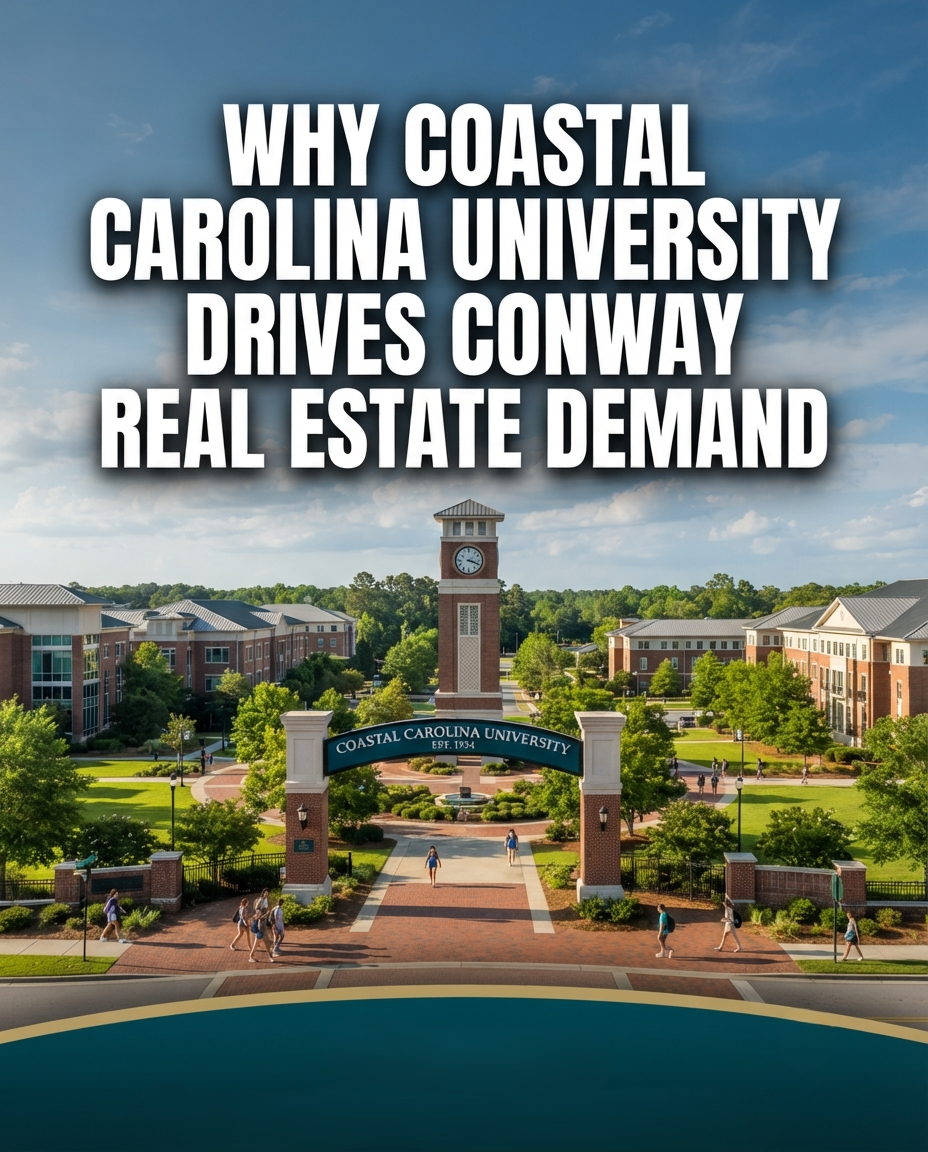
Why Coastal Carolina University Drives Conway Real Estate Demand

Coastal Carolina University is one of the quietest forces shaping the inland Horry County real estate market. The school sits just outside Conway, has grown steadily for two decades, and brings thousands of students, faculty, staff, and visiting families into the area every year. The downstream effects show up across the Conway housing market in ways that most casual observers miss. For buyers, investors, and even sellers, understanding the CCU impact is part of understanding why Conway has become one of the strongest small-city markets in coastal South Carolina.

Why CCU Matters to Conway Real Estate

Universities reshape the communities they sit in. CCU is no exception.

A Large, Steady Population Base

CCU brings a substantial student body to the Conway area, along with faculty, staff, and a regular flow of visiting families. That baseline population creates demand for housing, services, retail, and dining that supports steady real estate activity year-round.

Faculty and Staff as Year-Round Buyers

CCU faculty and staff are a meaningful share of the Conway home buyer pool. They tend to want proximity to campus, a real neighborhood feel, and longer-term ownership. Conway delivers all three.

Student Rental Demand

The student rental market is its own segment, with townhomes, condos, and smaller single-family homes drawing strong interest. For investors evaluating Conway, the rental income picture deserves a serious look. See our blog on the investor guide to long-term rentals on the Grand Strand for the broader investor framework.

How the CCU Effect Shows Up Across Conway

The university touches multiple Conway submarkets, not just the ones closest to campus.

Family-Oriented Subdivisions

Faculty and staff families gravitate to settled Conway subdivisions that feel like real neighborhoods. Myrtle Trace, Forest Glen, and Pecan Grove have all built steady reputations with the CCU community.

Newer Construction for Move-In Ready Demand

Buyers connected to CCU often want move-in-ready homes that do not require renovation. Newer Conway subdivisions like Fieldview and Night Owl Farms regularly produce inventory that meets that need.

Townhomes and Condos for Singles, Couples, and Investors

The CCU rental story shows up especially clearly in lower-maintenance product. Conway townhomes attract first-job graduates, working couples, and investors. For more on the product type and submarket, see our blog on a buyer's guide to townhome living in the Grand Strand area.

Why Buyers Outside the CCU Orbit Should Still Care

Even buyers with no CCU connection benefit from the CCU economic engine.

Stable Local Demand

A steady university population helps support property values through cycles. Markets with large institutional employers, including universities, tend to weather downturns better than tourist-only economies.

Year-Round Retail and Services

CCU's presence supports a deeper restaurant, retail, and services scene than Conway would otherwise have. That benefits every homeowner in the area, not just those tied to the university.

A Real-Town Feel

Universities give towns a certain character. Conway has art galleries, music venues, and a downtown energy that you do not typically find in a small inland coastal town. CCU is part of why.

Why Coastal Carolina University Drives Conway Real Estate Demand

What to Look at When Buying With CCU in Mind

Whether you are CCU-affiliated, a parent investing for student housing, or a long-term Conway buyer, a few specifics matter.

Proximity to Campus vs. Proximity to Downtown

CCU sits just outside Conway proper. Some buyers prioritize a quick drive to campus. Others prefer downtown Conway and a slightly longer commute. Both work, but the lifestyle is different.

Rental Rules Where Applicable

If you are buying with rental income in mind, especially around students, confirm HOA rules and lease term requirements before purchasing. Some communities limit lease length or restrict the number of unrelated occupants.

Long-Term Hold Strategy

Conway has performed well as a long-term hold market. Buyers who plan to own ten or more years tend to see the cleanest results, whether they are owner-occupants or investors. For more on the broader Conway story, see our blog on why Conway continues to attract buyers seeking small-town charm.

Key Takeaways

  • Coastal Carolina University is a major economic and population engine for Conway and the surrounding inland Horry County market
  • CCU drives steady demand from faculty, staff, students, and visiting families across multiple Conway submarkets
  • Family-oriented subdivisions, newer construction, and townhomes and condos all see CCU-related demand
  • Buyers and investors benefit from the stability a large institutional employer provides, even if they have no direct CCU connection

If Conway is on your short list, treating the CCU effect as part of the market thesis is the difference between a casual read and a serious one.

About Greg Harrelson

Greg Harrelson is a seasoned Realtor® with more than 30 years of experience serving the Myrtle Beach and Grand Strand markets. As the founder of Century 21 The Harrelson Group, Greg has built his career helping buyers, sellers, and investors achieve success in every corner of the coastal Carolina real estate market. His expertise spans residential homes, investment properties, land development, and coastal condos. Known for his deep local knowledge, innovative marketing strategies, and commitment to personal service, Greg consistently helps clients reach their real estate goals while navigating the ever-changing market with confidence and precision.
Posted in Buyer Information
July 6, 2026

A Guide to Buying Land in Horry County

Buying land in Horry County has a different rhythm than buying a finished home. The diligence checklist is longer, the financing path is narrower, and the upside, when it works, can be significant. As inventory of finished homes tightens in popular areas and as more buyers want to build rather than buy retail, land has quietly become one of the most interesting categories in the coastal South Carolina market. Below is a practical guide to what land buying actually looks like in Horry County and how to do it right.

Why Land Is Worth a Closer Look Right Now

Horry County is one of the fastest-growing counties in the southeast. That growth shapes the land story in a few specific ways.

Build-to-Suit Demand Is Strong

Buyers who could not find the right finished home in Conway, Longs, or Loris are increasingly willing to buy a lot and build. That shift has supported land prices and made inventory move faster than it used to.

Investors Are Looking at Land Differently

Investors who used to focus exclusively on rental property are looking at land for long-term holds, build-and-sell projects, and small subdivision plays. Horry County's growth trajectory makes the land thesis credible.

The Categories of Land in Horry County

Not all land is the same.

Improved Subdivision Lots

These are lots inside an existing subdivision where the roads, water, sewer, and power are already in place. Improved lots cost more per acre but are the easiest path to a finished home in the shortest time.

Unimproved Lots With Utility Access

These lots typically have road frontage and utilities nearby but are not part of a developed subdivision. Buyers usually need to budget for utility connections, driveway construction, and sometimes a septic system rather than sewer.

Raw Acreage

Larger parcels with no improvements. This is where the highest upside lives, but also the highest complexity. Buyers must work through zoning, perc tests, road access, utility availability, wetlands review, and timber inventory before committing.

Specialty Parcels

Waterfront, riverfront, marsh-adjacent, and farm parcels each have their own considerations. For background on river-adjacent buying, see our blog on what makes the Waccamaw River corridor special for homebuyers.

Where Buyers Are Finding Opportunity

Land opportunity in Horry County is concentrated inland.

Conway and Surrounding Areas

The Conway area has both improved subdivision lots and small acreage tracts. For buyers who want a real downtown nearby, plus river and forest scenery, Conway is the deepest land market in the county. For background, see our blog on why Conway continues to attract buyers seeking small-town charm.

Longs and Loris

Longs and Loris produce more raw acreage and unimproved lot inventory than Conway, often at lower per-acre prices. Buyers focused on space, privacy, and the ability to build something specific often gravitate here.

Beach-Area Land

Land inside the immediate beach corridor in North Myrtle Beach is rare and expensive. When it appears, demand is strong. Most beach-area land buyers are either building a primary or second home or are developers consolidating teardown lots.

A Guide to Buying Land in Horry County

The Land Diligence Checklist

Land deserves more diligence than most buyers expect.

Zoning and Use

What you can actually do with the parcel depends on Horry County zoning. Confirm zoning at the county before assuming. The seller's marketing description does not control the legal use.

Utility Availability

Confirm what is available, water, sewer, power, internet, and cable. Some parcels look attractive until the buyer discovers a sewer connection would cost tens of thousands of dollars.

Septic vs. Sewer

Outside sewer service areas, parcels require septic systems. That triggers a perc test, soil suitability review, and a septic design before you know the buildable layout. Skipping this step is the single biggest land buying mistake.

Wetlands and Flood Zones

Horry County has substantial wetland and flood-zone overlay. A parcel that looks buildable may have significant restricted area. For background on flood considerations, see our blog on coastal South Carolina flood zones explained for homebuyers.

Access and Easements

Make sure the parcel has legal road access. Landlocked parcels with verbal "neighbor lets us cross" arrangements are real risks. Easements should be documented and recorded.

Survey

A current, professional survey is essential, especially for raw acreage. Boundary disputes are expensive to resolve later and easy to avoid up front.

Financing Land

Land financing is meaningfully different from home financing.

Higher Down Payments and Rates

Land loans typically require larger down payments and carry higher interest rates than conventional mortgages on existing homes. Buyers should plan for this in their underwriting.

Construction Loans for Build-to-Suit

Buyers planning to build often use a construction-to-permanent loan that covers land purchase and construction in a single financing structure. A local lender can walk through what fits your specific project.

Cash Land Buyers Have an Edge

Land sellers often prefer cash buyers because cash closes faster and avoids the financing contingency risks. Cash buyers can sometimes negotiate price meaningfully.

Key Takeaways

Horry County land buying is a real category that rewards patient, disciplined buyers. It is not a quick path to a finished home, but it can be the right move for the right buyer.

  • Horry County land ranges from improved subdivision lots in Conway to raw acreage in Longs and Loris
  • Beach-area land is rare and expensive, with most opportunity inland in Conway, Longs, Loris, and surrounding pockets
  • Zoning, utilities, septic feasibility, wetlands, access, and survey are all non-negotiable diligence items
  • Land financing requires larger down payments and higher rates, and cash buyers often have a meaningful negotiation edge

The smart approach is to define exactly what you want to build or hold before shopping, then filter parcels against that definition. The buyers who land in the right parcel almost always know exactly what they are looking for before they start.

About Greg Harrelson

Greg Harrelson is a seasoned Realtor® with more than 30 years of experience serving the Myrtle Beach and Grand Strand markets. As the founder of Century 21 The Harrelson Group, Greg has built his career helping buyers, sellers, and investors achieve success in every corner of the coastal Carolina real estate market. His expertise spans residential homes, investment properties, land development, and coastal condos. Known for his deep local knowledge, innovative marketing strategies, and commitment to personal service, Greg consistently helps clients reach their real estate goals while navigating the ever-changing market with confidence and precision.

Posted in Buyer Information
July 3, 2026

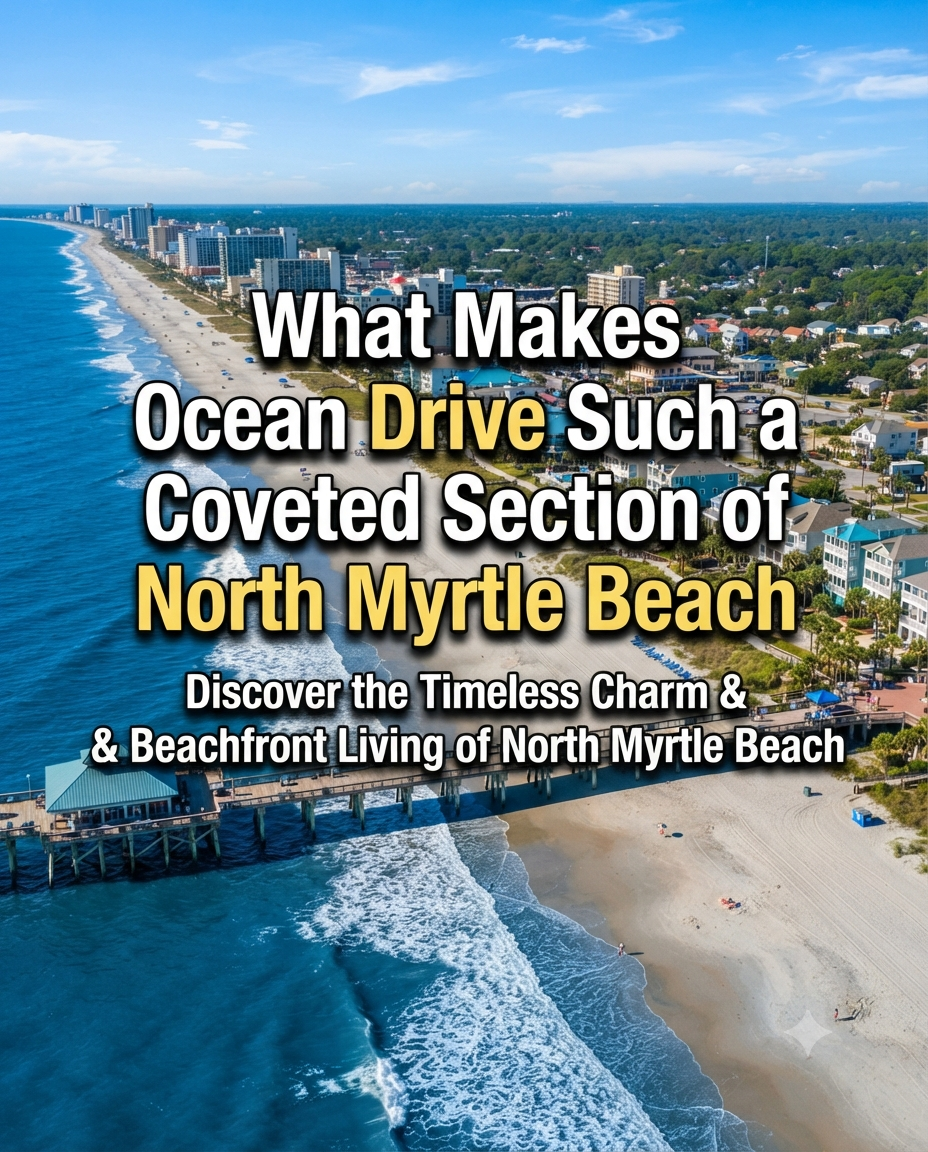
What Makes Ocean Drive Such a Coveted Section of North Myrtle Beach

Ask longtime locals which section of North Myrtle Beach has the most loyal following, and Ocean Drive almost always comes up first. The neighborhood sits at the heart of NMB's beach identity, blends a strong year-round community with steady vacation traffic, and is home to the famous Main Street strip where shag dancing was born. For buyers, Ocean Drive carries a brand value that few other sections of the Grand Strand can match. The question is whether that brand translates into the right purchase for your goals.

What Ocean Drive Actually Is

Ocean Drive, often just called "OD" by locals, is one of the original beach sections that combined with three other communities to form modern North Myrtle Beach. The section sits between Crescent Beach to the south and Cherry Grove to the north, with Main Street and the Pavilion area at its core.

A Historic Stretch of Beach

Ocean Drive has a deep beach-town history. Generations of families have vacationed here, many for decades. The neighborhood retains a sense of identity that most modern beach developments cannot replicate. For background on related NMB sections that share this feel, see our blog on what it is like to live full-time in Cherry Grove, SC.

Home of Shag Dancing

Main Street in OD is the spiritual home of the Carolina shag, the official state dance of South Carolina. Annual SOS (Society of Stranders) events still draw thousands of visitors, and the cultural footprint shapes the everyday character of the neighborhood.

Why Ocean Drive Stays in High Demand

The neighborhood's appeal is not nostalgia alone.

Walkable Beach Lifestyle

Most Ocean Drive homes and condos sit within walking or short-golf-cart distance of the beach. That walkability is the single biggest practical reason buyers gravitate toward OD. For background on what makes daily life here special, see our blog on local events that make North Myrtle Beach, SC a great place to live.

A True Year-Round Neighborhood

OD is not just a tourist area. There is a real year-round community of full-time residents, retirees, and second-home owners who actually use their homes. The neighborhood does not empty out in October the way some beach sections do.

Strong Mix of Product Types

Ocean Drive includes oceanfront condos, raised beach homes, classic single-family beach cottages, and second-row residential streets. The product mix gives buyers options at different price points and lifestyles. For more on the most popular product type, see our blog on why buyers love raised beach homes in North Myrtle Beach.

What Makes Ocean Drive Such a Coveted Section of North Myrtle Beach

Who Tends to Land in Ocean Drive

OD attracts a specific buyer profile.

Multi-Generational Families

Many OD buyers have a multi-decade family history in the neighborhood. Buying a home in OD is sometimes about returning to a place that already feels like home, rather than discovering a new one.

Active Retirees Who Want a Real Town

Retirees who want a walkable beach lifestyle and a true neighborhood feel often choose OD over more isolated or resort-driven sections. The combination of Main Street, the beach, and the local social scene supports an active retirement.

Vacation Rental Buyers Targeting Family Stays

OD's rental market is strong, especially for family-oriented stays and the SOS event windows. The neighborhood has a long track record of repeat vacationers who book the same property year after year. For background, see our blog on what buyers should know before purchasing a vacation rental.

What to Look at Before Buying in Ocean Drive

OD is a deep market, and buyers should approach it with the same diligence as any other.

Lot Specifics

OD streets vary block to block. Some streets are quieter and more residential. Others see steady summer traffic. Walking the specific block at different times of day is part of any responsible OD purchase.

Flood Zones

Like the rest of the immediate beach corridor, much of OD sits in a FEMA flood zone. Flood insurance is part of the carrying cost picture, especially for ground-level and second-row properties. For background, see our blog on coastal South Carolina flood zones explained for homebuyers.

HOA Structure for Condo and Townhome Buyers

OD oceanfront and second-row condo buildings each have their own HOA financial profile. Master insurance pricing, reserves, and recent assessment history vary by building. For more on this, see our blog on understanding HOA fees in North Myrtle Beach condo communities.

How Ocean Drive Compares to Other NMB Sections

OD is one of several distinct NMB sections, each with its own personality.

Cherry Grove to the north has a quieter, more residential beach character, with channel homes and a calmer pace. Crescent Beach to the south has its own loyal local following and tends to feel slightly less commercial than the OD core. Windy Hill is more residential still. The honest answer is that none of these sections is objectively better. They are different products. For more context on choosing between NMB submarkets, see our blog on understanding micro-markets within North Myrtle Beach, SC.

Key Takeaways

Ocean Drive holds a unique place in the Grand Strand real estate landscape. Its combination of history, walkability, and year-round neighborhood feel is rare on the coast and explains why buyer demand has stayed strong across multiple cycles.

  • Ocean Drive is one of the historic core sections of North Myrtle Beach and home to the Carolina shag tradition
  • The neighborhood blends walkable beach access with a real year-round community, which most beach sections do not deliver in equal measure
  • Buyers should still respect block-level differences, flood zones, and HOA structure during diligence
  • OD competes for buyers with Cherry Grove, Crescent Beach, and Windy Hill, each of which delivers a different version of the NMB experience

For buyers who want a beach lifestyle inside a real neighborhood, with deep local culture and steady demand, Ocean Drive deserves a top-of-list look.

Frequently Asked Questions

What is Ocean Drive in North Myrtle Beach?

Ocean Drive is one of the original four beach sections that combined to form modern North Myrtle Beach. It sits between Crescent Beach and Cherry Grove and includes Main Street, the historic core where shag dancing originated.

Is Ocean Drive expensive compared to other NMB sections?

Pricing depends more on specific micro-location, product type, and condition than on the section name. OD has options at multiple price points, from oceanfront condos to second-row residential homes.

Is Ocean Drive a good place to live year-round?

Yes, for many buyers. OD has a stronger year-round community feel than some beach sections. Full-time residents, retirees, and second-home owners all coexist here.

Can I rent out my Ocean Drive home short-term?

Often yes, but rental rules vary by specific property and HOA. Always confirm the rules in writing before purchasing if rental income is part of your strategy.

About Greg Harrelson

Greg Harrelson is a seasoned Realtor® with more than 30 years of experience serving the Myrtle Beach and Grand Strand markets. As the founder of Century 21 The Harrelson Group, Greg has built his career helping buyers, sellers, and investors achieve success in every corner of the coastal Carolina real estate market. His expertise spans residential homes, investment properties, land development, and coastal condos. Known for his deep local knowledge, innovative marketing strategies, and commitment to personal service, Greg consistently helps clients reach their real estate goals while navigating the ever-changing market with confidence and precision.
Posted in Buyer Information
July 2, 2026

Myrtle Beach vs North Myrtle Beach: What Is the Difference?

Out-of-state buyers shopping coastal South Carolina almost always ask the same question early in the search. What is the real difference between Myrtle Beach and North Myrtle Beach? The names sound similar, the two towns sit on the same coastline, and from a satellite view they almost feel like the same place. They are not. The day-to-day experience of living in each is meaningfully different, and the right choice for any individual buyer depends on what kind of coastal life they actually want. Below is an honest, local-first look at the differences that matter.

Two Distinct Towns, One Coastline

Myrtle Beach and North Myrtle Beach share the Atlantic, the Grand Strand brand, and a lot of the regional economy. From there, they diverge.

Geographic Layout

North Myrtle Beach sits at the north end of the Grand Strand, closer to the North Carolina state line. Myrtle Beach sits roughly in the middle of the Grand Strand, with its tourist core densely developed and the population center surrounding it. The drive between the two is about 20 to 30 minutes depending on traffic.

Density and Pace

Myrtle Beach has the higher-volume tourist economy, with more hotels, more attractions, more restaurants, and more nightlife. North Myrtle Beach has a quieter, more residential feel even in its busiest sections. The pace difference is real, and most buyers feel it within an hour of being in town.

Lifestyle Differences That Actually Matter

The town you choose shapes daily life in specific ways.

Tourism Volume

Myrtle Beach absorbs a much larger share of regional tourism. Peak season traffic, restaurant waits, and beach crowds are part of the deal. North Myrtle Beach has tourism too, but at a lower density and with a more family-oriented profile.

Beachfront Character

Myrtle Beach has a higher concentration of mid- and high-rise oceanfront buildings, especially in the central tourist corridor. North Myrtle Beach is more low-rise, with smaller condo buildings, beach cottages, and more single-family residential mixed in. For more on one of the most popular single-family product types in the area, see our blog on why buyers love raised beach homes in North Myrtle Beach.

Neighborhood Mix

North Myrtle Beach includes several distinct neighborhood sections, including Cherry Grove, Ocean Drive, Crescent Beach, and Windy Hill, each with its own personality. Myrtle Beach is more contiguous but also has identifiable submarkets near the airport, along Carolina Forest, and toward the south end at Surfside. For background on the NMB submarket nuances, see our blog on understanding micro-markets within North Myrtle Beach, SC.

Real Estate Differences

The two towns produce different real estate outcomes.

Price and Product Mix

Myrtle Beach has more high-rise condo inventory, especially oceanfront and in tourist corridors. North Myrtle Beach has more low-rise condo inventory and more residential single-family inventory near the beach. Pricing varies more by specific micro-location than by town brand.

Vacation Rental Market

Myrtle Beach historically has the larger vacation rental engine due to higher overall tourism volume. North Myrtle Beach has a strong rental market too, often with a more family-oriented and longer-stay profile. For background on what to evaluate either way, see our blog on what buyers should know before purchasing a vacation rental.

Year-Round Resident Communities

North Myrtle Beach's residential neighborhoods are well established and many retain a strong year-round community even outside tourist season. Myrtle Beach also has year-round residential, but the tourist economy is a more dominant part of the everyday backdrop.

Myrtle Beach vs North Myrtle Beach What Is the Difference

Who Tends to Pick Which

Different buyer profiles tend to gravitate toward different towns.

Why Buyers Choose Myrtle Beach

Buyers focused on maximum oceanfront inventory choice, robust vacation rental volume, more dining and entertainment options, and proximity to the airport often pick Myrtle Beach. Investors looking for higher-volume short-term rental income often favor it as well.

Why Buyers Choose North Myrtle Beach

Buyers focused on quieter neighborhoods, a less dense beachfront, low-rise residential feel, and a strong year-round community character tend to choose North Myrtle Beach. Families who like the smaller-town beach feel and retirees who want a calmer day-to-day often land here. For a closer look at what daily life is like in one of the most popular North Myrtle Beach sections, see our blog on what it is like to live full-time in Cherry Grove, SC.

Often Overlooked Considerations

Several practical factors get less attention than they should.

Drive Time to Healthcare and Daily Services

Both towns have strong infrastructure, but specific drives to specialists, hospitals, and certain shopping can differ. Buyers should map their actual most-used destinations before deciding.

HOA and Building Profiles

Oceanfront HOA structures differ across both towns. Coastal exposure, master insurance pricing, and special assessment history all vary by building, not just by town. For background, see our blog on understanding HOA fees in North Myrtle Beach condo communities.

Future Development Trajectory

Both towns are growing, but the kind of growth differs. Buyers who decide neither beach town fits often look at inland alternatives like Conway or marina-oriented communities in Little River. Myrtle Beach has more large-scale tourism and entertainment development. North Myrtle Beach's growth tends to be more residential and lower-density.

Key Takeaways

  • Myrtle Beach and North Myrtle Beach share the Grand Strand coastline but deliver meaningfully different lifestyles
  • Myrtle Beach is higher-density, more tourist-driven, with more high-rise oceanfront inventory and a larger vacation rental engine
  • North Myrtle Beach is lower-density, more residential, with low-rise beachfront and a stronger year-round community feel
  • The right choice depends on the buyer profile, with investors and high-volume vacation rental buyers often picking Myrtle Beach and families, retirees, and second-home owners often picking North Myrtle Beach

The smart approach for out-of-state buyers is to spend time in both towns across multiple visits before committing. The two are close enough that you can compare them in a single trip, and different enough that the choice matters.

Frequently Asked Questions

How far apart are Myrtle Beach and North Myrtle Beach?

The drive between the two is roughly 20 to 30 minutes depending on traffic and starting point. They share the same coastline but have separate town governments, identities, and lifestyles.

Is one cheaper than the other?

Pricing depends more on the specific micro-location and product type than on the town. Both towns include oceanfront, second-row, inland, and residential options at a wide range of prices.

Which is better for retirees?

Many retirees prefer North Myrtle Beach for its quieter feel and stronger year-round residential character. Others prefer Myrtle Beach for its broader amenity base and higher density of services. The right choice is personal.

Which is better for vacation rental investment?

Myrtle Beach historically supports higher tourism volume, which often produces stronger short-term rental volume. North Myrtle Beach can deliver strong rental returns too, often with longer stays and more family-oriented bookings. Pro-forma both carefully before committing.

About Greg Harrelson

Greg Harrelson is a seasoned Realtor® with more than 30 years of experience serving the Myrtle Beach and Grand Strand markets. As the founder of Century 21 The Harrelson Group, Greg has built his career helping buyers, sellers, and investors achieve success in every corner of the coastal Carolina real estate market. His expertise spans residential homes, investment properties, land development, and coastal condos. Known for his deep local knowledge, innovative marketing strategies, and commitment to personal service, Greg consistently helps clients reach their real estate goals while navigating the ever-changing market with confidence and precision.
July 1, 2026

The Investor Guide to Long-Term Rentals on the Grand Strand

The Grand Strand vacation rental market gets most of the attention, but the long-term rental market is quietly one of the strongest investor stories in coastal South Carolina. Year-round demand from full-time residents, remote workers, and relocators has built a deep, stable tenant pool. Long-term rentals deliver less drama than vacation rentals, more predictable cash flow, and significantly less management overhead. For investors who want a quieter, less seasonal asset, long-term rentals on the Grand Strand deserve a serious look.

Why Long-Term Rentals Work on the Grand Strand

The long-term rental thesis is built on demand fundamentals, not seasonal tourism.

A Real Year-Round Rental Pool

Year-round residents in Conway, Longs, Loris, and the surrounding inland market need housing every month of the year. Workforce demand from healthcare, education, hospitality, and trades supports a deep tenant pool that does not evaporate in October.

Lower Management Friction Than Vacation Rentals

A long-term rental typically turns over once a year or less, compared to a vacation rental that may turn weekly. Less turnover means less cleaning, less furnishing, lower utility costs, and less management overhead.

Less Insurance Complexity

Long-term rentals carry standard landlord insurance, which is meaningfully simpler than the master condo and short-term rental insurance stack that oceanfront vacation rentals require. For background on the contrast, see our blog on what buyers should know before purchasing a vacation rental.

The Investor Guide to Long-Term Rentals on the Grand Strand

Where Investors Are Finding the Best Long-Term Rentals

Long-term rental returns are highly location-specific. The strongest submarkets are not always the beach.

Inland Horry County

Inland submarkets like Conway, Longs, and Loris often deliver the best long-term rental yields. Lower purchase prices, real workforce demand, and stable single-family rental inventory make the math work.

Conway Subdivisions for Family Tenants

Family-oriented Conway subdivisions like Dove Crossing, Heartwood, and Maple Hill attract long-term family tenants who tend to stay multiple years.

Townhomes and Condos for Single Tenants and Couples

Townhomes and lower-maintenance condos in Conway and Longs work well for single tenants, couples, and small families. For background on the product type, see our blog on condo vs single-family home on the Grand Strand.

Carefully Selected Beach-Area Long-Term Rentals

Long-term rentals in North Myrtle Beach and Little River can work, but pricing is tighter. The strongest beach-area long-term rentals tend to be smaller homes or off-resort condos with lower carrying costs. Owners who choose this path should be deliberate about HOA rules, since some beach communities restrict or discourage long-term rentals.

What Smart Long-Term Rental Investors Underwrite

The numbers matter more than the property.

Realistic Gross Rent

Use comps from the specific submarket and the specific product type. Beach-area gross rent does not translate to inland comparable units, and vice versa.

Honest Carrying Cost

The honest cost stack includes mortgage, property tax at the 6 percent second-home rate unless the property qualifies as primary, landlord insurance, HOA where applicable, vacancy reserve, maintenance reserve, and property management if not self-managing. For background on tax treatment, see our blog on understanding property taxes in Horry County.

Vacancy Assumption

Long-term rentals have lower vacancy than vacation rentals, but the right modeling assumes some vacancy each year, particularly between tenants. A vacancy reserve of one month of rent per year is a reasonable starting point.

Maintenance Reserve

Roofs, HVAC, water heaters, and appliances do not last forever. A maintenance reserve of one to two percent of property value per year smooths the cash flow.

Operational Considerations

Long-term rental success is about operations as much as acquisition.

Tenant Screening

Strong tenant screening is the single highest-leverage activity in long-term rental management. Credit, employment, and rental history checks should be standard, and the screening criteria should be applied consistently to all applicants in compliance with fair housing law.

Lease Structure

South Carolina has specific landlord-tenant rules that should be reflected in the lease. Working with a local attorney or experienced property manager to build a strong lease pays off over the long run.

Self-Manage vs Property Manager

Self-management saves cost but takes time and local presence. Out-of-state investors and busy in-state investors usually benefit from a property manager, particularly for portfolios of more than one or two properties.

How Long-Term Rentals Compare to Vacation Rentals

Both are real strategies, but they suit different investors.

Vacation rentals can deliver higher gross income but at the cost of seasonal volatility, higher operating expenses, complex insurance, and more management. Long-term rentals deliver lower gross income but with steadier cash flow, lower expenses, and less management overhead. Investors with longer time horizons and less appetite for operational complexity often favor long-term rentals, while investors with strong rental management infrastructure and a stomach for seasonality often favor vacation rentals.

Key Takeaways

  • The Grand Strand long-term rental market is supported by year-round workforce demand, not just tourism
  • Inland Horry County, including Conway, Longs, and Loris, typically delivers the strongest yields and the most stable tenant pool
  • Honest underwriting must include second-home property tax treatment, landlord insurance, vacancy reserve, and maintenance reserve
  • Long-term rentals trade lower gross income for lower volatility, simpler operations, and easier insurance compared to vacation rentals

For investors who want a coastal Carolina asset that performs without the seasonal swings of vacation rental income, long-term rentals on the Grand Strand are a category worth taking seriously.

About Greg Harrelson

Greg Harrelson is a seasoned Realtor® with more than 30 years of experience serving the Myrtle Beach and Grand Strand markets. As the founder of Century 21 The Harrelson Group, Greg has built his career helping buyers, sellers, and investors achieve success in every corner of the coastal Carolina real estate market. His expertise spans residential homes, investment properties, land development, and coastal condos. Known for his deep local knowledge, innovative marketing strategies, and commitment to personal service, Greg consistently helps clients reach their real estate goals while navigating the ever-changing market with confidence and precision.
Posted in Buyer Information
June 30, 2026

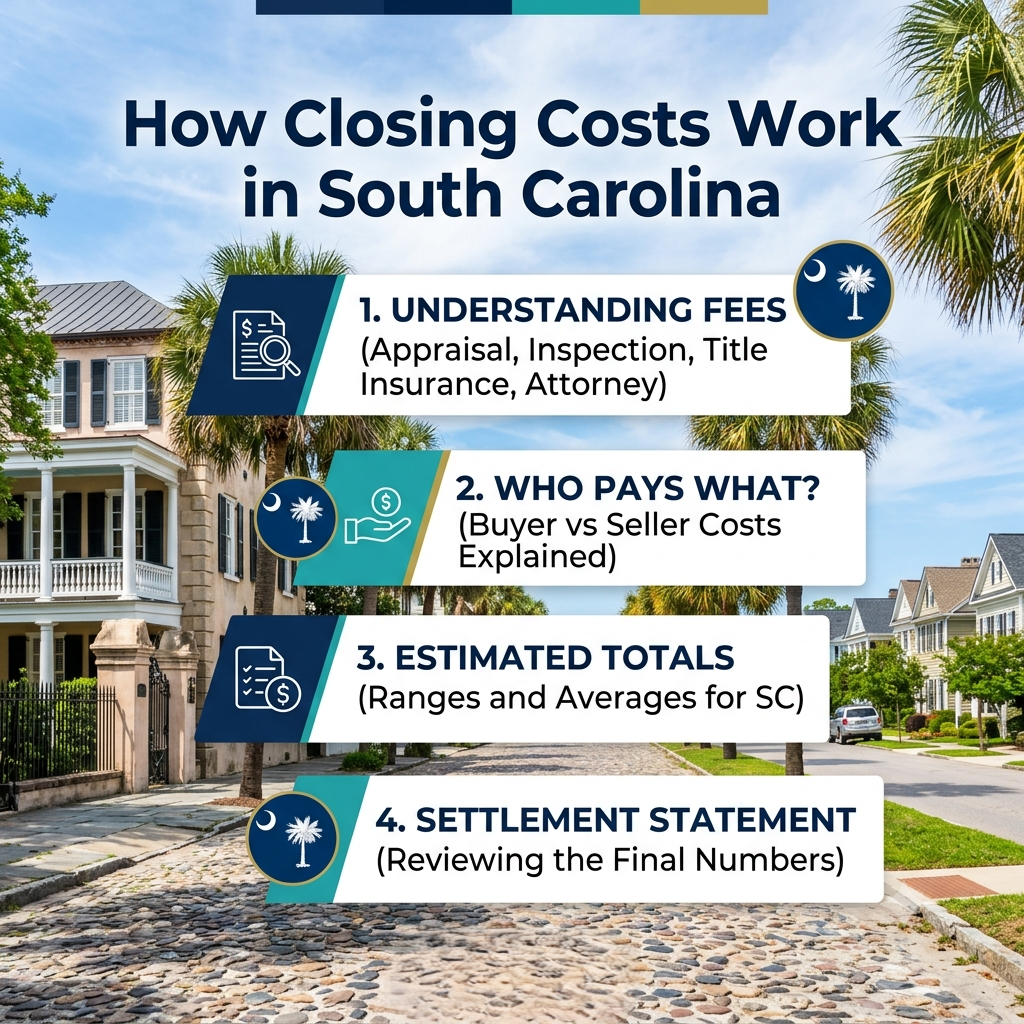
How Closing Costs Work in South Carolina

Closing on a home in South Carolina has its own rhythm and its own line items. Buyers and sellers coming from other states, especially those buying in North Myrtle Beach or inland communities like Conway, are often surprised by who runs the closing, how documents flow, and which costs land in which column. Knowing the structure ahead of time makes the process smoother and lets buyers and sellers budget the way they should rather than reacting to surprises at the table. Below is a clear, practical breakdown of how closing costs actually work in South Carolina.

Who Runs a South Carolina Closing

South Carolina is an attorney-state. That single fact shapes how everything works.

The Closing Attorney

South Carolina law requires real estate closings to be handled by a licensed South Carolina attorney. The attorney drafts the deed, reviews the title work, handles the escrow account, prepares the closing disclosure or settlement statement, and conducts the closing itself. There is no title company running the show the way buyers from Florida, Texas, or other title-state markets are used to.

Buyer and Seller Choice

Buyers typically choose the closing attorney since they usually pay the closing costs and most of the attorney fees. Sellers can have their own attorney represent them, but in many transactions the closing attorney handles documents for both sides.

Typical Buyer Closing Costs

Buyers carry the larger share of the closing cost stack in most South Carolina transactions.

Attorney and Title Fees

These include the closing attorney's fee, title search and examination fees, and title insurance premiums. Title insurance is split into a lender's policy, which is typically required by the mortgage company, and an owner's policy, which is optional but strongly recommended.

Lender-Related Costs

For buyers with a mortgage, these include the loan origination fee, underwriting fees, appraisal fee, credit report fee, and any discount points. Lender requirements also typically trigger an upfront escrow deposit for property taxes and insurance.

Recording Fees

The county charges a recording fee to file the deed and the mortgage. The amount depends on the document length and county schedule.

Prepaid Items

These are not technically closing costs but show up at the table. Buyers prepay homeowners insurance for the first year, prorate property taxes for the year, and fund the escrow account with several months of taxes and insurance reserves.

HOA Transfer Fees

For condo and HOA-governed home purchases, the HOA typically charges a transfer fee, a capital contribution, and a document fee. These can add up to several hundred or even a few thousand dollars depending on the community. For more on the HOA side, see our blog on understanding HOA fees in North Myrtle Beach condo communities.

Inspection Costs Before Closing

Inspection fees are paid before closing, not at the table, but they belong in the buyer cost stack. A general home inspection plus optional add-ons like termite, wind mitigation, or HVAC specialty inspections can total several hundred dollars. Coastal buyers should also factor in the ongoing maintenance reality after closing; see our blog on how salt air affects coastal properties.

How Closing Costs Work in South Carolina

Typical Seller Closing Costs

Sellers have their own line items, though they usually total less than the buyer side in cash terms.

Real Estate Commission

The single largest seller cost is usually the real estate commission, which is negotiated between the seller and the listing brokerage. The commission typically covers both the listing side and the cooperating buyer's brokerage.

South Carolina Deed Stamps

South Carolina charges a deed recording tax, commonly called deed stamps. The rate is set at the state and county level and is paid by the seller in most cases. The amount scales with the sale price.

Prorated Property Taxes

The seller is responsible for property taxes through the closing date. Taxes are typically prorated and either credited to the buyer or paid out at closing depending on how the county's billing cycle aligns with the closing.

HOA Estoppel and Cleanup

Sellers usually pay for the HOA estoppel letter and any current HOA dues owed through the closing date. Some communities also require sellers to clear any open violations before closing.

Repairs and Concessions

If repairs are negotiated from the inspection, those costs come out of the seller side, either through credits at closing or pre-closing work completed.

What Buyers and Sellers Often Underestimate

Three line items consistently surprise people.

Prepaid Insurance and Escrow

Lenders typically require buyers to prepay homeowners insurance and to fund an escrow account at closing. On coastal properties, where wind and flood insurance premiums are higher, the prepaid stack can be larger than buyers expect. For background, see our blog on what wind and hail insurance covers in coastal South Carolina.

Property Tax Proration

South Carolina taxes are billed late in the calendar year, so depending on the closing date, the buyer may owe a credit to the seller or vice versa. The proration math is small but worth understanding. For background on tax assessment categories, see our blog on understanding property taxes in Horry County.

Coastal-Specific Items

Wind mitigation inspections, flood elevation certificates, and certain master condo policy reviews can add small but meaningful costs to coastal closings. None of these are huge in isolation, but together they add up.

Key Takeaways

Closing in South Carolina is a tightly choreographed process, but a transparent one when you know the structure. Both sides benefit from a clear cost estimate well before the closing table.

  • South Carolina is an attorney-state, and the closing attorney runs the document and escrow side of every transaction
  • Buyers typically pay the bulk of closing costs, including attorney, lender, title, prepaid insurance and escrow, recording, and HOA transfer fees
  • Sellers pay commission, deed stamps, prorated property taxes, HOA estoppel and current dues, and any negotiated repairs or concessions
  • Prepaid insurance, tax proration, and coastal-specific items are the line items that most often surprise buyers and sellers, especially out-of-state ones

The cleanest closings happen when buyers and sellers each get a written estimate of their closing costs early in the transaction, then update it as inspection negotiations and lender details firm up. A local agent and a local attorney working together will produce that estimate for you.

Frequently Asked Questions

Do I need an attorney to close on a home in South Carolina?

Yes. South Carolina law requires real estate closings to be handled by a licensed South Carolina attorney. The attorney prepares the deed, conducts the title work, manages escrow, and runs the closing itself.

Who pays closing costs in South Carolina?

Buyers typically pay the larger share, including attorney, title, lender, recording, and HOA transfer fees. Sellers pay commission, deed stamps, prorated property taxes, and HOA dues through closing. Specific items can be negotiated.

How much should I budget for closing costs?

Buyer closing costs commonly run several thousand dollars on a primary residence and more on coastal or higher-priced properties. The honest answer is that your lender and closing attorney can produce a Loan Estimate and a closing disclosure with exact numbers tied to your specific transaction.

Can closing costs be rolled into the loan?

Some closing costs can be financed, depending on the loan program and the lender. Others must be paid in cash. A local lender can walk through which costs fit which category for your specific loan.

About Greg Harrelson

Greg Harrelson is a seasoned Realtor® with more than 30 years of experience serving the Myrtle Beach and Grand Strand markets. As the founder of Century 21 The Harrelson Group, Greg has built his career helping buyers, sellers, and investors achieve success in every corner of the coastal Carolina real estate market. His expertise spans residential homes, investment properties, land development, and coastal condos. Known for his deep local knowledge, innovative marketing strategies, and commitment to personal service, Greg consistently helps clients reach their real estate goals while navigating the ever-changing market with confidence and precision.

June 29, 2026

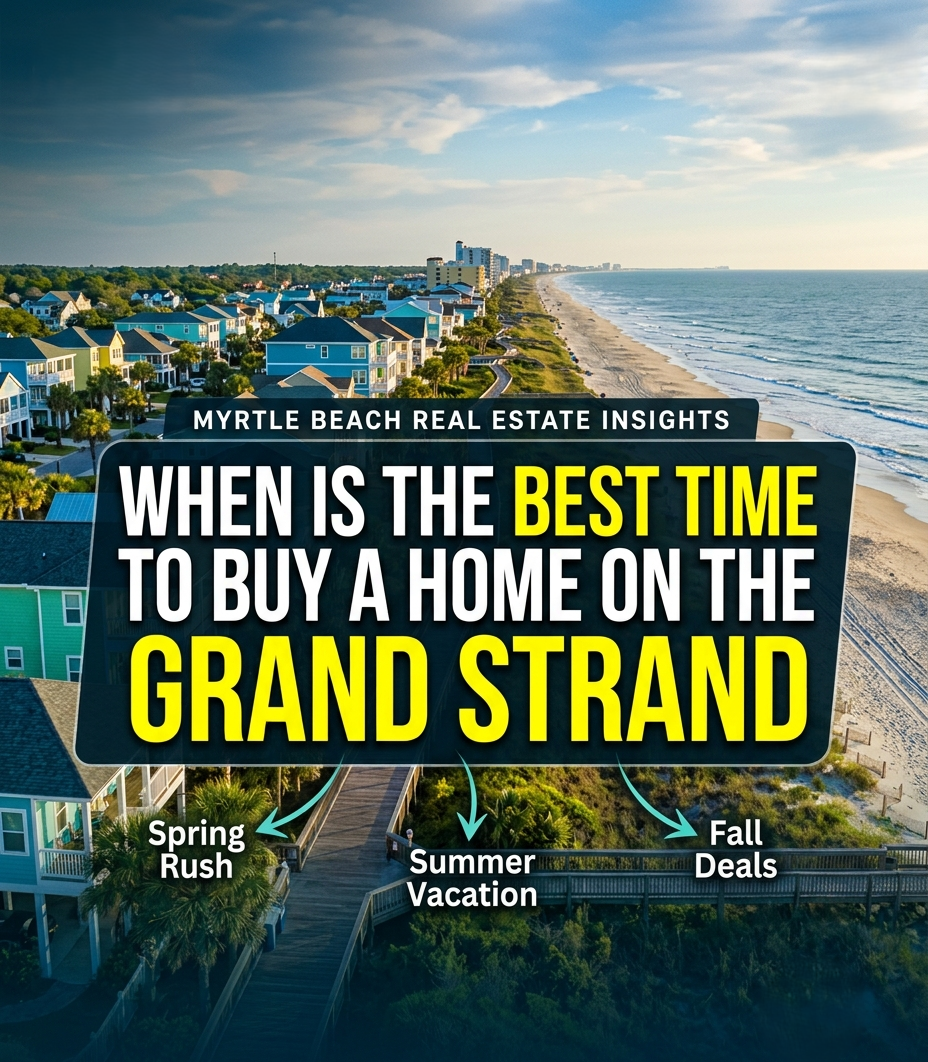
When Is the Best Time to Buy a Home on the Grand Strand

Buyers spend a lot of time asking when to sell, but the better question is often when to buy. The Grand Strand market does have buyer-friendly stretches each year, and recognizing them can make a meaningful difference in price, inventory, and negotiation leverage. The best time to buy is not the same as the best time to sell, and it shifts depending on whether you are after a primary residence, a second home, or an investment property. Below is an honest, local-first look at when buyers actually get the best outcomes here.

Why Buyer Timing Is Its Own Question

Buyer timing on the Grand Strand has nothing to do with a national playbook. It is driven by the local rhythm of tourism, the snowbird calendar, and the supply cycles of new construction.

Sellers Are More Flexible in Specific Windows

The same property can attract very different offers depending on when it comes to market. Sellers who list during slower windows often accept stronger negotiation. Sellers who list during peak windows usually hold firm.

Inventory Quality Shifts by Season

The inventory that hits the market in February and March is not the same inventory that hits in July. Buyers willing to shop in off-peak months sometimes get the cleanest deals on properties other buyers will not see until later.

The Strongest Buyer Windows

Several specific stretches of the year tend to favor buyers more than sellers on the Grand Strand.

Late Fall Through Early Winter (Mid-November Through January)

This is the single strongest buyer-friendly window. Tourist traffic has dropped off, the snowbird buyer pool has not yet fully arrived, and listings that have been sitting are often priced to move. Sellers who missed the late summer window are increasingly motivated as the calendar turns. Buyers with cash, strong financing, and the willingness to close before year-end often find real opportunities here.

Late Summer After the Tourist Peak (Mid-August)

The other meaningful buyer window. Listings that did not sell in spring or early summer have been sitting, and sellers are starting to think about the year-end. Negotiation flexibility opens up before the late summer and fall buyer pool fully ramps.

Right After Major Storm Headlines

This is not a season, but a market dynamic worth knowing. After a major storm misses the area, demand temporarily cools for a week or two as buyers absorb headlines. Buyers who keep shopping during these stretches occasionally see softer pricing on otherwise strong listings.

When Is the Best Time to Buy a Home on the Grand Strand

Windows Where Buyers Have Less Leverage

Some stretches favor sellers more than buyers.

Late Winter Through Spring

February through May is the strongest seller window in most years. Snowbirds, retirees, and out-of-state buyers are all active, inventory is often tight, and sellers hold firm. Buyers can still win, but expect less negotiation room.

Peak Summer for Tourist-Driven Markets

For oceanfront condos and vacation-rental-oriented units, peak summer is when seller confidence is highest. The rental income story is fresh, the area is full of potential second-home shoppers, and sellers are less willing to negotiate.

How the Right Buyer Window Depends on the Product

Buyer timing is not one-size-fits-all.

Primary Residence Buyers

If you are buying a primary home, late fall and early winter usually offer the best combination of price flexibility and inventory choice. School-calendar buyers have stepped back, and motivated sellers are more common.

Second-Home Buyers

Second-home buyers tend to win in the off-peak windows when emotional buyer competition is lower. Slowing the search down and shopping when others are not shopping is the consistent advantage. For more on this lifestyle decision, see our blog on condo vs single-family home on the Grand Strand.

Investor Buyers

Investor buyers should pay close attention to the rental income story of any unit they consider, especially for oceanfront condos. Buying near the end of a strong rental year, when income data is freshest, often produces the cleanest underwriting. For background, see our blog on what buyers should know before purchasing a vacation rental.

What Buyers Should Do Before Their Window Opens

Timing only works if you are prepared to move when the right deal appears.

Get Pre-Approved Early

The difference between a strong offer and a weak one is often the strength of the financing letter. Get pre-approved before the buying window you want to use, not during it.

Define Your Target Submarket

The Grand Strand is many submarkets, including North Myrtle Beach, Little River, Conway, Longs, and Loris. Narrow your search before the window opens so you can act decisively when the right listing appears.

Build Your Local Team Ahead of Time

An agent, a lender, an inspector, and a closing attorney all need to be ready before you start writing offers. Buyers who scramble for team members during their window lose deals to faster buyers.

Key Takeaways

  • Late fall through early winter is the single strongest buyer window on the Grand Strand
  • Late August through early September is a second buyer-favorable window as the summer market settles
  • Spring is a seller market in most years, and buyers should expect less negotiation room
  • Primary, second-home, and investor buyers each have different optimal windows, but all benefit from preparing the team and the financing before the right deal appears

The shortest answer is that buyer timing rewards patience, preparation, and a willingness to shop when others are not. The best deals usually happen when the rest of the market is looking the other way.

Frequently Asked Questions

Is winter really the best time to buy a Grand Strand home?

For many buyers, yes. Inventory that has been sitting is often more negotiable, sellers who missed peak season are increasingly motivated, and buyer competition is lower. The trade-off is fewer fresh listings, so the right strategy is to be ready to move when a strong one appears.

Do prices drop in the off-season?

Headline list prices do not always drop, but final sale prices often do. Off-season buyers frequently negotiate more on price, closing costs, or repairs than buyers shopping in peak season.

Should I wait for interest rates to drop before buying?

Rate timing is a personal decision tied to your financial situation. Some buyers wait for lower rates. Others buy now and refinance later if rates improve. A local lender can model both scenarios for your specific case.

Are off-season inspections any different?

Generally no. A good inspector will catch the same issues in any season. Some defects, like air conditioning function under heat load, are easier to verify in summer, but a thorough inspector will note items that cannot be fully tested in cold weather so you know what to recheck.

About Greg Harrelson

Greg Harrelson is a seasoned Realtor® with more than 30 years of experience serving the Myrtle Beach and Grand Strand markets. As the founder of Century 21 The Harrelson Group, Greg has built his career helping buyers, sellers, and investors achieve success in every corner of the coastal Carolina real estate market. His expertise spans residential homes, investment properties, land development, and coastal condos. Known for his deep local knowledge, innovative marketing strategies, and commitment to personal service, Greg consistently helps clients reach their real estate goals while navigating the ever-changing market with confidence and precision.

Posted in Buyer Information