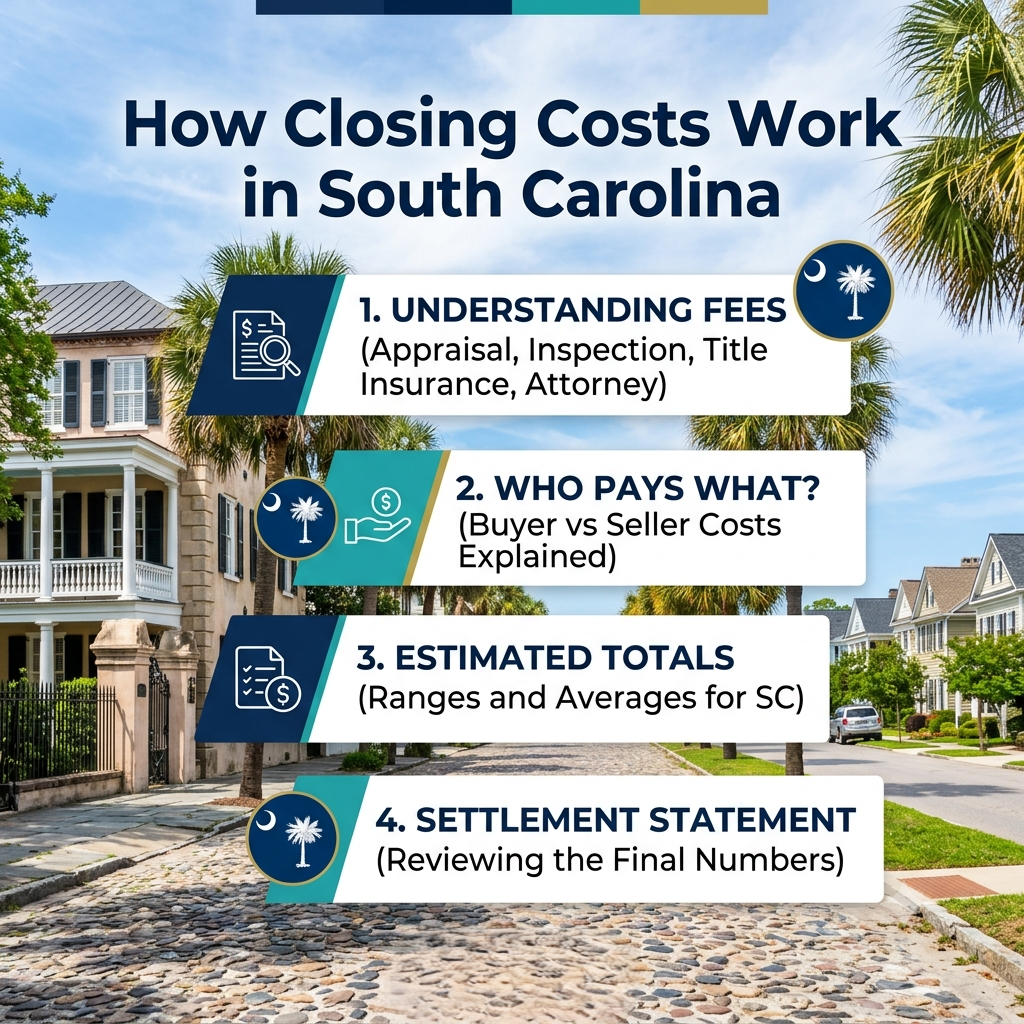
Closing on a home in South Carolina has its own rhythm and its own line items. Buyers and sellers coming from other states, especially those buying in North Myrtle Beach or inland communities like Conway, are often surprised by who runs the closing, how documents flow, and which costs land in which column. Knowing the structure ahead of time makes the process smoother and lets buyers and sellers budget the way they should rather than reacting to surprises at the table. Below is a clear, practical breakdown of how closing costs actually work in South Carolina.
Who Runs a South Carolina Closing
South Carolina is an attorney-state. That single fact shapes how everything works.
The Closing Attorney
South Carolina law requires real estate closings to be handled by a licensed South Carolina attorney. The attorney drafts the deed, reviews the title work, handles the escrow account, prepares the closing disclosure or settlement statement, and conducts the closing itself. There is no title company running the show the way buyers from Florida, Texas, or other title-state markets are used to.
Buyer and Seller Choice
Buyers typically choose the closing attorney since they usually pay the closing costs and most of the attorney fees. Sellers can have their own attorney represent them, but in many transactions the closing attorney handles documents for both sides.
Typical Buyer Closing Costs
Buyers carry the larger share of the closing cost stack in most South Carolina transactions.
Attorney and Title Fees
These include the closing attorney's fee, title search and examination fees, and title insurance premiums. Title insurance is split into a lender's policy, which is typically required by the mortgage company, and an owner's policy, which is optional but strongly recommended.
Lender-Related Costs
For buyers with a mortgage, these include the loan origination fee, underwriting fees, appraisal fee, credit report fee, and any discount points. Lender requirements also typically trigger an upfront escrow deposit for property taxes and insurance.
Recording Fees
The county charges a recording fee to file the deed and the mortgage. The amount depends on the document length and county schedule.
Prepaid Items
These are not technically closing costs but show up at the table. Buyers prepay homeowners insurance for the first year, prorate property taxes for the year, and fund the escrow account with several months of taxes and insurance reserves.
HOA Transfer Fees
For condo and HOA-governed home purchases, the HOA typically charges a transfer fee, a capital contribution, and a document fee. These can add up to several hundred or even a few thousand dollars depending on the community. For more on the HOA side, see our blog on understanding HOA fees in North Myrtle Beach condo communities.
Inspection Costs Before Closing
Inspection fees are paid before closing, not at the table, but they belong in the buyer cost stack. A general home inspection plus optional add-ons like termite, wind mitigation, or HVAC specialty inspections can total several hundred dollars. Coastal buyers should also factor in the ongoing maintenance reality after closing; see our blog on how salt air affects coastal properties.
Typical Seller Closing Costs
Sellers have their own line items, though they usually total less than the buyer side in cash terms.
Real Estate Commission
The single largest seller cost is usually the real estate commission, which is negotiated between the seller and the listing brokerage. The commission typically covers both the listing side and the cooperating buyer's brokerage.
South Carolina Deed Stamps
South Carolina charges a deed recording tax, commonly called deed stamps. The rate is set at the state and county level and is paid by the seller in most cases. The amount scales with the sale price.
Prorated Property Taxes
The seller is responsible for property taxes through the closing date. Taxes are typically prorated and either credited to the buyer or paid out at closing depending on how the county's billing cycle aligns with the closing.
HOA Estoppel and Cleanup
Sellers usually pay for the HOA estoppel letter and any current HOA dues owed through the closing date. Some communities also require sellers to clear any open violations before closing.
Repairs and Concessions
If repairs are negotiated from the inspection, those costs come out of the seller side, either through credits at closing or pre-closing work completed.
What Buyers and Sellers Often Underestimate
Three line items consistently surprise people.
Prepaid Insurance and Escrow
Lenders typically require buyers to prepay homeowners insurance and to fund an escrow account at closing. On coastal properties, where wind and flood insurance premiums are higher, the prepaid stack can be larger than buyers expect. For background, see our blog on what wind and hail insurance covers in coastal South Carolina.
Property Tax Proration
South Carolina taxes are billed late in the calendar year, so depending on the closing date, the buyer may owe a credit to the seller or vice versa. The proration math is small but worth understanding. For background on tax assessment categories, see our blog on understanding property taxes in Horry County.
Coastal-Specific Items
Wind mitigation inspections, flood elevation certificates, and certain master condo policy reviews can add small but meaningful costs to coastal closings. None of these are huge in isolation, but together they add up.
Key Takeaways
Closing in South Carolina is a tightly choreographed process, but a transparent one when you know the structure. Both sides benefit from a clear cost estimate well before the closing table.
- South Carolina is an attorney-state, and the closing attorney runs the document and escrow side of every transaction
- Buyers typically pay the bulk of closing costs, including attorney, lender, title, prepaid insurance and escrow, recording, and HOA transfer fees
- Sellers pay commission, deed stamps, prorated property taxes, HOA estoppel and current dues, and any negotiated repairs or concessions
- Prepaid insurance, tax proration, and coastal-specific items are the line items that most often surprise buyers and sellers, especially out-of-state ones
The cleanest closings happen when buyers and sellers each get a written estimate of their closing costs early in the transaction, then update it as inspection negotiations and lender details firm up. A local agent and a local attorney working together will produce that estimate for you.
Frequently Asked Questions
Do I need an attorney to close on a home in South Carolina?
Yes. South Carolina law requires real estate closings to be handled by a licensed South Carolina attorney. The attorney prepares the deed, conducts the title work, manages escrow, and runs the closing itself.
Who pays closing costs in South Carolina?
Buyers typically pay the larger share, including attorney, title, lender, recording, and HOA transfer fees. Sellers pay commission, deed stamps, prorated property taxes, and HOA dues through closing. Specific items can be negotiated.
How much should I budget for closing costs?
Buyer closing costs commonly run several thousand dollars on a primary residence and more on coastal or higher-priced properties. The honest answer is that your lender and closing attorney can produce a Loan Estimate and a closing disclosure with exact numbers tied to your specific transaction.
Can closing costs be rolled into the loan?
Some closing costs can be financed, depending on the loan program and the lender. Others must be paid in cash. A local lender can walk through which costs fit which category for your specific loan.
About Greg Harrelson
Greg Harrelson is a seasoned Realtor® with more than 30 years of experience serving the Myrtle Beach and Grand Strand markets. As the founder of Century 21 The Harrelson Group, Greg has built his career helping buyers, sellers, and investors achieve success in every corner of the coastal Carolina real estate market. His expertise spans residential homes, investment properties, land development, and coastal condos. Known for his deep local knowledge, innovative marketing strategies, and commitment to personal service, Greg consistently helps clients reach their real estate goals while navigating the ever-changing market with confidence and precision.