Why Oceanfront Condos Get So Much Attention
Almost every buyer who calls me about North Myrtle Beach has pictured the same thing. Coffee on the balcony, waves out front, and nothing between you and the water but sand. It is a great picture, and plenty of owners live it every year. But an oceanfront condo is also one of the most expensive and most demanding ways to own on the Grand Strand, and the buyers who are happiest are the ones who went in with eyes open.
Let me walk through the good and the not-so-good the way I would at the kitchen table with a client.
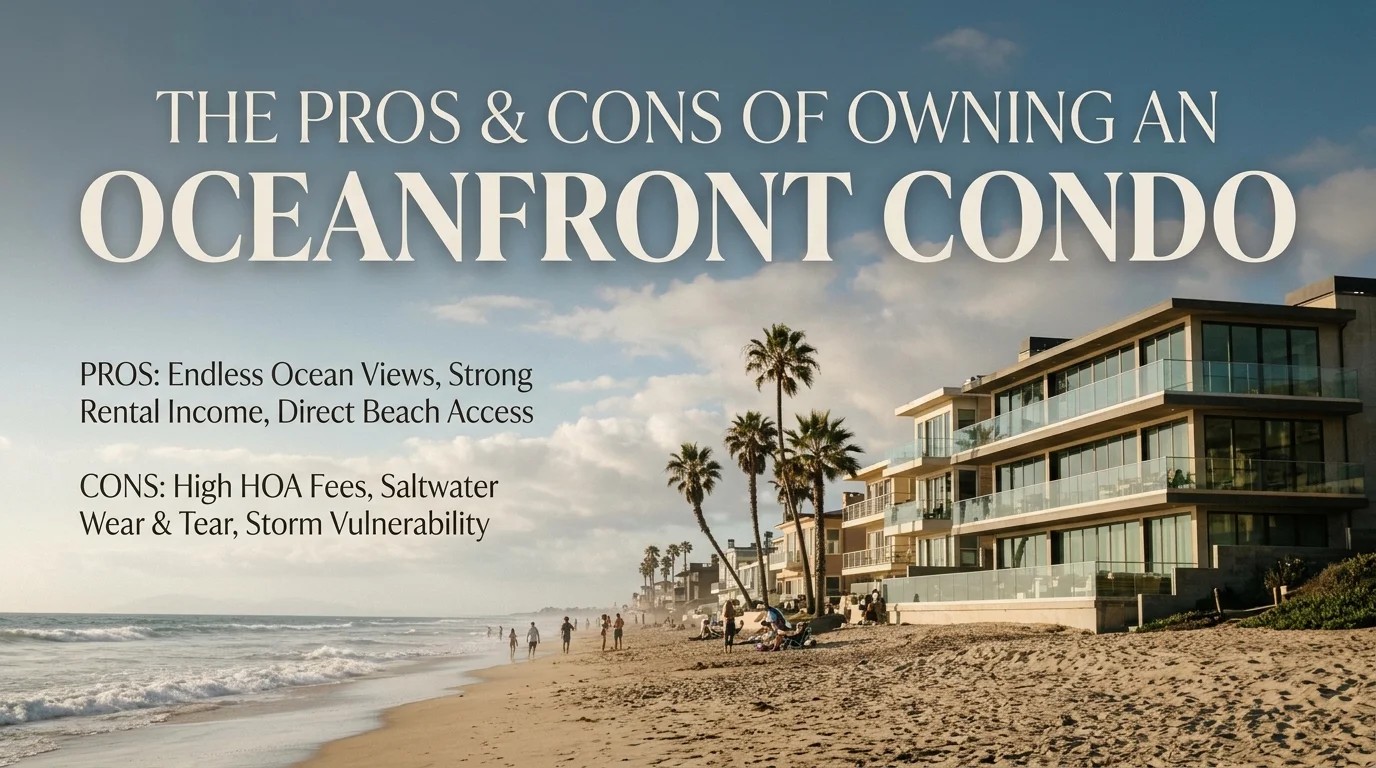
The Pros of Owning Oceanfront
The View and the Access
You cannot copy the view. Sunrise over the Atlantic, dolphins in the surf, a storm rolling in from a safe distance. Many owners tell me they use the unit more than they planned simply because the balcony is so hard to leave. Walk-out beach access also means no packing a wagon and fighting for parking.
Strong Demand From Renters and Future Buyers
Direct oceanfront is a limited supply. There is only so much shoreline, and that is why these units tend to draw attention from vacation renters and from buyers down the road. Demand is never guaranteed, but scarcity helps.
Amenities Built Into the Building
Most oceanfront buildings come with pools, lazy rivers, fitness rooms, and sometimes on-site services. For a second-home owner who is gone part of the year, having that managed for you is a real benefit.
The Cons Nobody Likes to Talk About
Salt, Wind, and Wear
The ocean is hard on buildings. Salt air attacks metal railings, sliding doors, HVAC equipment, and exterior finishes. Buildings that sit right on the sand usually spend more on maintenance than buildings a few blocks back. That cost does not disappear. It lands on the owners through monthly dues and, sometimes, special assessments.
Higher HOA Dues and Assessments
Oceanfront dues are often higher because the building has more to maintain: elevators, pools, balconies, glass, and a lot of exposed exterior. When I review a building for a buyer, I ask for the budget, the reserve study, and the last two years of meeting minutes. If a big repair is coming, you want to know before you close, not after.
Insurance Is a Bigger Line Item
Wind and hail coverage, flood coverage, and the condo master policy all matter. A unit on the beachfront can cost noticeably more to insure than one inland. Your unit coverage and the association coverage are two different things, and you need to understand where one ends and the other begins.
Crowds and Noise in Season
Summer is busy. If the unit rents weekly, expect a rotation of guests. If you are buying for quiet, ask what the building is like in July, not just in March.
Costs, Risks, and Practical Considerations
Before you fall for a view, run the real numbers. Here is the list I walk buyers through:
- Purchase price compared with a similar unit a few rows back from the water.
- Monthly HOA dues and what they include.
- Reserves and any planned or recent special assessments.
- Insurance quotes for your specific unit, including flood.
- Rental rules, minimum stays, and any limits on how often you can rent.
- Property taxes, which can differ depending on how the unit is classified and used.
Flood zone and elevation questions also matter, especially on the beachfront. Ask for the elevation certificate if one exists and talk to an insurance agent early in the process.
Observations From a Local Agent
Here are three things I have noticed over the years working with oceanfront buyers in North Myrtle Beach.
First, buyers who choose the building before they choose the unit usually do better. A well-run association with healthy reserves can be a better buy than a nicer unit in a building with deferred maintenance.
Second, many people underestimate how much they will actually use a second home. If you will be here three weeks a year, the carrying costs deserve a hard look. If you will be here three months, the math feels very different.
Third, the best-kept units are almost always owned by people who visit often and fix small things quickly. When I tour a unit with clean sliding door tracks and no rust on the railing, I take that as a good sign about the owner and often the building.
Strategy for Buyers
Start by deciding what you really want out of the unit. If it is the view and the lifestyle, oceanfront may be worth the premium. If it is mostly beach access and a good value, a second-row or ocean-view building can give you much of the same experience for less.
Then do the homework. Read the documents, get real insurance quotes, and visit the building more than once, ideally in different seasons. If something does not feel right, trust that.
If you would like help comparing a few buildings side by side, I am glad to pull the details together for you.
Key Takeaways
- Oceanfront condos offer unmatched views, beach access, and limited supply, but they come with higher ownership costs.
- Salt air, wind, and exposure drive higher maintenance, HOA dues, and sometimes special assessments.
- Insurance for beachfront units, including flood coverage, can be a major cost, so get quotes before you commit.
- Review the budget, reserves, and meeting minutes, and choose the building before the unit.
- Compare oceanfront with second-row or ocean-view options if value matters as much as the view.
About Greg Harrelson
Greg Harrelson is a seasoned Realtor® with more than 30 years of experience serving the Myrtle Beach and Grand Strand markets. As the founder of Century 21 The Harrelson Group, Greg has built his career helping buyers, sellers, and investors achieve success in every corner of the coastal Carolina real estate market. His expertise spans residential homes, investment properties, land development, and coastal condos. Known for his deep local knowledge, innovative marketing strategies, and commitment to personal service, Greg consistently helps clients reach their real estate goals while navigating the ever-changing market with confidence and precision.