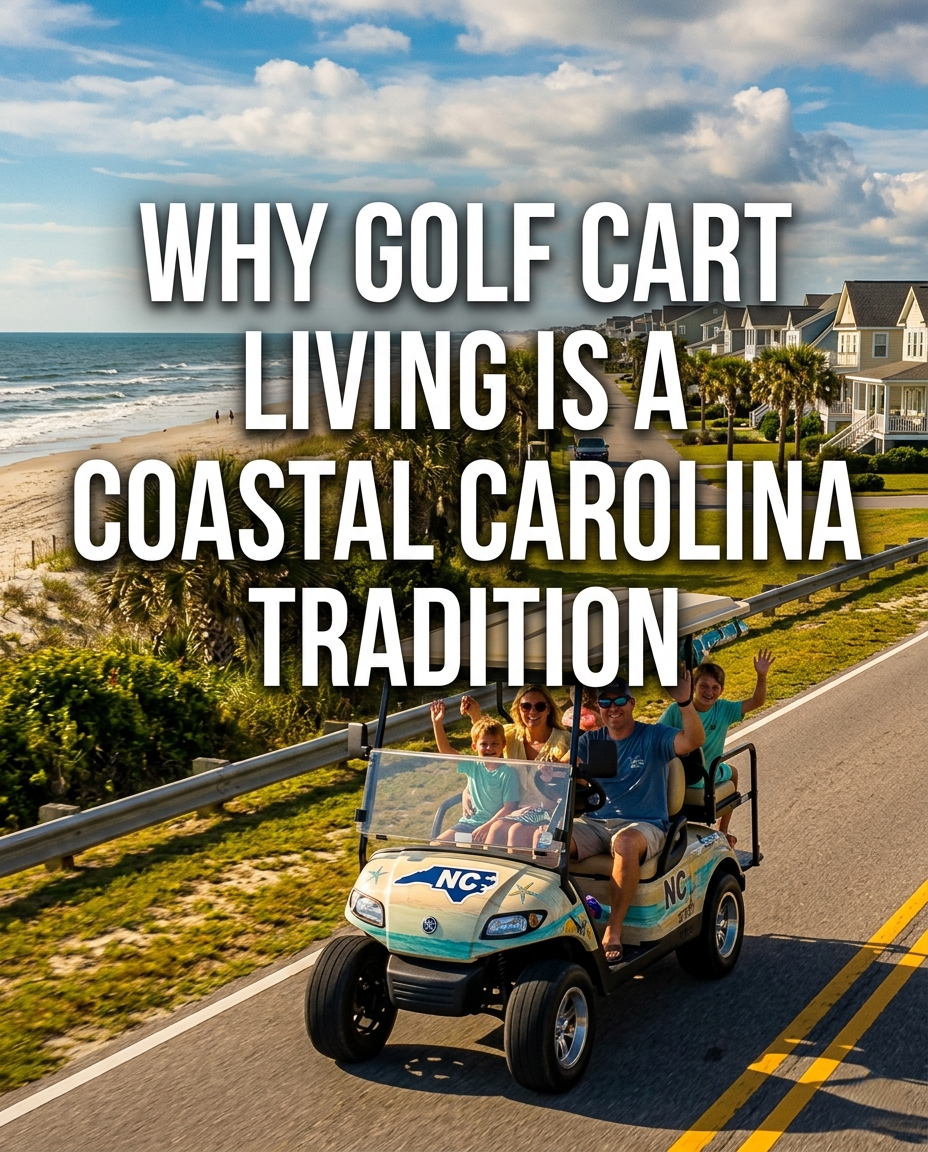
If you spend any time in North Myrtle Beach during the warmer months, one of the first things you notice is the steady stream of golf carts rolling down the streets. Families heading to the beach with chairs strapped to the back. Couples cruising to a Main Street restaurant. Neighbors waving to neighbors as they make a Walmart run with the breeze in their hair. It's not a quirk of the area. It's a defining part of the lifestyle, and it's one of the reasons buyers fall in love with homes for sale in North Myrtle Beach in the first place.
How Golf Cart Living Became a Coastal Tradition
Golf cart culture on the Carolina coast didn't appear overnight. It grew naturally out of decades of golf-oriented community development, the rise of beach neighborhoods built for short walks to the ocean, and a local mindset that prioritizes slow, social, outdoor living. Once the golf course communities established the cart as a normal way to get around, the rest of the area followed.
From Golf Course to Main Street
What started as a way to get from the clubhouse to your tee time turned into a way to get from your driveway to the dunes. North Myrtle Beach and many of the surrounding communities have golf cart paths, designated parking, and local ordinances that allow carts on most residential streets and many connectors. The result is a town where a cart is a real form of daily transportation, not just a novelty.
Neighborhoods Built Around the Cart
Communities like Tilghman Estates and the broader Ocean Drive and Cherry Grove neighborhoods were essentially designed around easy cart access. Quiet streets, shaded canopies, short blocks, and easy connections to the beach put the cart at the center of daily life.
Why Buyers Love It
For many out-of-state buyers, golf cart living becomes one of the most unexpected and beloved parts of moving to the coast.
It Changes How You Live
Errands feel like outings. Trips to the beach happen on impulse. Evening drives become a social ritual. The cart slows life down in the best way and creates the kind of unhurried beach lifestyle that buyers come here looking for.
Neighborhood Connection
People talk to each other from carts in ways they never would from a car. Wave to a neighbor, stop and chat for a minute, hear about a new restaurant or a community event. It's a small thing that adds up to a stronger sense of community.
Practical Daily Use
The cart handles short trips beautifully, especially in summer when traffic gets heavy. Skipping the car for a run to the grocery store, the beach, or a casual dinner saves time and gas while making the day more enjoyable.
Where Golf Cart Living Shines on the Grand Strand
Different parts of the Grand Strand have different cart cultures, and the right neighborhood depends on how central you want the cart to be in your daily life.
Cherry Grove and Ocean Drive
These are some of the most cart-friendly neighborhoods on the South Carolina coast. Short blocks, beach access, walkable shops, and well-established cart paths combine to make daily life by cart feel completely natural. Buyers who want the iconic Carolina beach town experience often start their search in these areas, including the Cherry Grove channel homes where many owners keep both a boat and a cart.
Golf Course Communities
Communities built around golf courses are naturally cart-focused. Many have private cart paths that wind through the neighborhoods and connect to clubhouses, pools, and amenities. For golfers, that integration is part of the appeal.
Inland and Newer Neighborhoods
Newer developments inland from the beach often include cart paths and cart-friendly streets as part of the original design. Buyers should still verify with the HOA whether carts can be operated on the surrounding public streets, since rules vary by city and county.
Practical Considerations for Cart Owners
Owning and operating a cart in coastal Carolina has a few rules and best practices worth understanding before you buy one.
Registration and Permits
South Carolina requires golf carts used on public roads to be registered with the SCDMV and to follow specific rules, including distance limits from the owner's address. Owners should check current state and local requirements and make sure their cart is properly registered.
Lights, Mirrors, and Safety Equipment
Carts operated on public roads need to meet certain equipment standards including headlights, taillights, mirrors, and safety reflectors. These rules are practical, not bureaucratic, and they make the cart safer for both the operator and other drivers on the road.
Insurance and Storage
Most cart owners carry insurance on the cart separately from their auto and home policies. Storage is another consideration. Carts handle salt air better than many vehicles, but covered storage extends the life significantly. Many raised beach homes and newer construction designs include space underneath specifically for cart storage.
Key Takeaways
- Golf cart living is a defining feature of life along the coastal Carolina coast, especially in North Myrtle Beach and the surrounding beach neighborhoods
- Neighborhoods like Cherry Grove, Ocean Drive, and Tilghman Estates are built around easy cart access to the beach, shopping, and local restaurants
- The cart creates a slower, more social daily lifestyle that buyers consistently mention as one of their favorite parts of moving to the area
- South Carolina requires golf carts used on public roads to be registered with the SCDMV and to meet specific equipment requirements
- Practical considerations like insurance, covered storage, and HOA cart rules should be reviewed before purchasing both the cart and the home
About Greg Harrelson
Greg Harrelson is a seasoned Realtor® with more than 30 years of experience serving the Myrtle Beach and Grand Strand markets. As the founder of Century 21 The Harrelson Group, Greg has built his career helping buyers, sellers, and investors achieve success in every corner of the coastal Carolina real estate market. His expertise spans residential homes, investment properties, land development, and coastal condos. Known for his deep local knowledge, innovative marketing strategies, and commitment to personal service, Greg consistently helps clients reach their real estate goals while navigating the ever-changing market with confidence and precision.