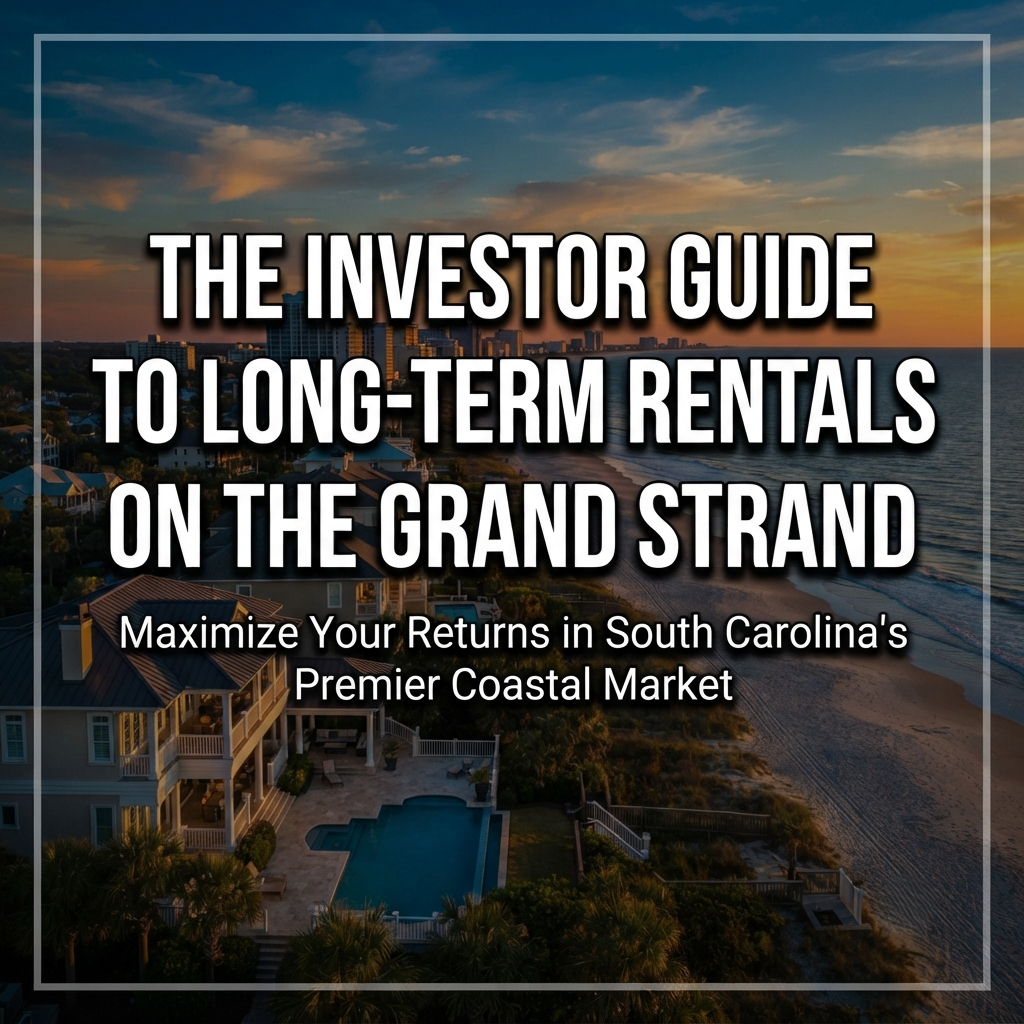
The Grand Strand vacation rental market gets most of the attention, but the long-term rental market is quietly one of the strongest investor stories in coastal South Carolina. Year-round demand from full-time residents, remote workers, and relocators has built a deep, stable tenant pool. Long-term rentals deliver less drama than vacation rentals, more predictable cash flow, and significantly less management overhead. For investors who want a quieter, less seasonal asset, long-term rentals on the Grand Strand deserve a serious look.
Why Long-Term Rentals Work on the Grand Strand
The long-term rental thesis is built on demand fundamentals, not seasonal tourism.
A Real Year-Round Rental Pool
Year-round residents in Conway, Longs, Loris, and the surrounding inland market need housing every month of the year. Workforce demand from healthcare, education, hospitality, and trades supports a deep tenant pool that does not evaporate in October.
Lower Management Friction Than Vacation Rentals
A long-term rental typically turns over once a year or less, compared to a vacation rental that may turn weekly. Less turnover means less cleaning, less furnishing, lower utility costs, and less management overhead.
Less Insurance Complexity
Long-term rentals carry standard landlord insurance, which is meaningfully simpler than the master condo and short-term rental insurance stack that oceanfront vacation rentals require. For background on the contrast, see our blog on what buyers should know before purchasing a vacation rental.
Where Investors Are Finding the Best Long-Term Rentals
Long-term rental returns are highly location-specific. The strongest submarkets are not always the beach.
Inland Horry County
Inland submarkets like Conway, Longs, and Loris often deliver the best long-term rental yields. Lower purchase prices, real workforce demand, and stable single-family rental inventory make the math work.
Conway Subdivisions for Family Tenants
Family-oriented Conway subdivisions like Dove Crossing, Heartwood, and Maple Hill attract long-term family tenants who tend to stay multiple years.
Townhomes and Condos for Single Tenants and Couples
Townhomes and lower-maintenance condos in Conway and Longs work well for single tenants, couples, and small families. For background on the product type, see our blog on condo vs single-family home on the Grand Strand.
Carefully Selected Beach-Area Long-Term Rentals
Long-term rentals in North Myrtle Beach and Little River can work, but pricing is tighter. The strongest beach-area long-term rentals tend to be smaller homes or off-resort condos with lower carrying costs. Owners who choose this path should be deliberate about HOA rules, since some beach communities restrict or discourage long-term rentals.
What Smart Long-Term Rental Investors Underwrite
The numbers matter more than the property.
Realistic Gross Rent
Use comps from the specific submarket and the specific product type. Beach-area gross rent does not translate to inland comparable units, and vice versa.
Honest Carrying Cost
The honest cost stack includes mortgage, property tax at the 6 percent second-home rate unless the property qualifies as primary, landlord insurance, HOA where applicable, vacancy reserve, maintenance reserve, and property management if not self-managing. For background on tax treatment, see our blog on understanding property taxes in Horry County.
Vacancy Assumption
Long-term rentals have lower vacancy than vacation rentals, but the right modeling assumes some vacancy each year, particularly between tenants. A vacancy reserve of one month of rent per year is a reasonable starting point.
Maintenance Reserve
Roofs, HVAC, water heaters, and appliances do not last forever. A maintenance reserve of one to two percent of property value per year smooths the cash flow.
Operational Considerations
Long-term rental success is about operations as much as acquisition.
Tenant Screening
Strong tenant screening is the single highest-leverage activity in long-term rental management. Credit, employment, and rental history checks should be standard, and the screening criteria should be applied consistently to all applicants in compliance with fair housing law.
Lease Structure
South Carolina has specific landlord-tenant rules that should be reflected in the lease. Working with a local attorney or experienced property manager to build a strong lease pays off over the long run.
Self-Manage vs Property Manager
Self-management saves cost but takes time and local presence. Out-of-state investors and busy in-state investors usually benefit from a property manager, particularly for portfolios of more than one or two properties.
How Long-Term Rentals Compare to Vacation Rentals
Both are real strategies, but they suit different investors.
Vacation rentals can deliver higher gross income but at the cost of seasonal volatility, higher operating expenses, complex insurance, and more management. Long-term rentals deliver lower gross income but with steadier cash flow, lower expenses, and less management overhead. Investors with longer time horizons and less appetite for operational complexity often favor long-term rentals, while investors with strong rental management infrastructure and a stomach for seasonality often favor vacation rentals.
Key Takeaways
- The Grand Strand long-term rental market is supported by year-round workforce demand, not just tourism
- Inland Horry County, including Conway, Longs, and Loris, typically delivers the strongest yields and the most stable tenant pool
- Honest underwriting must include second-home property tax treatment, landlord insurance, vacancy reserve, and maintenance reserve
- Long-term rentals trade lower gross income for lower volatility, simpler operations, and easier insurance compared to vacation rentals
For investors who want a coastal Carolina asset that performs without the seasonal swings of vacation rental income, long-term rentals on the Grand Strand are a category worth taking seriously.
About Greg Harrelson
Greg Harrelson is a seasoned Realtor® with more than 30 years of experience serving the Myrtle Beach and Grand Strand markets. As the founder of Century 21 The Harrelson Group, Greg has built his career helping buyers, sellers, and investors achieve success in every corner of the coastal Carolina real estate market. His expertise spans residential homes, investment properties, land development, and coastal condos. Known for his deep local knowledge, innovative marketing strategies, and commitment to personal service, Greg consistently helps clients reach their real estate goals while navigating the ever-changing market with confidence and precision.